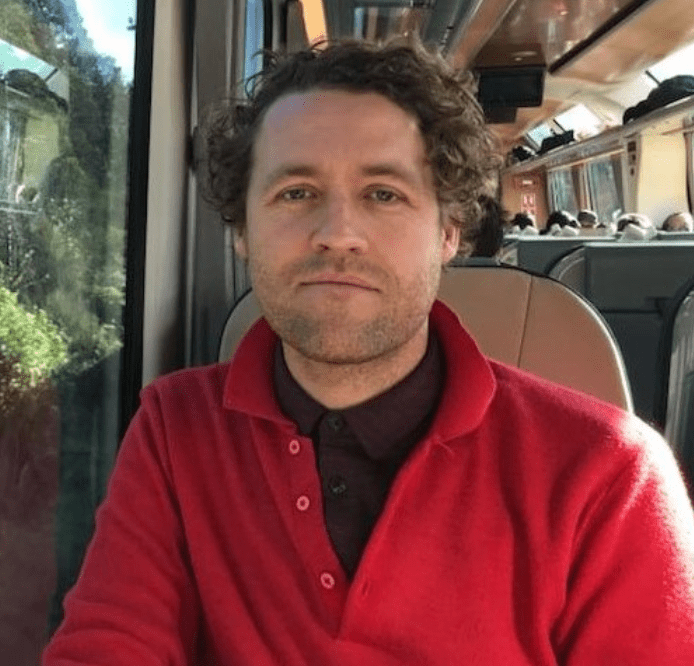
In late 2023, Harkness Fellow Jym Clark, a senior policy analyst at the Ministry for the Environment, spent several months in New Mexico learning about how initiatives underway in the state combine climate change adaptation policy and urban planning that takes account of indigenous and other ethnic communities’ approaches and needs.
in this Q&A, we catch up with Jym about his fellowship experience, lessons we can learn from, and the privilege of spending time on Tribal lands in New Mexico.
Where and when did you complete your Harkness fellowship?
I began my fellowship in Los Angeles in August 2023. Most of my time was spent in Albuquerque New Mexico in the beautiful arid south-west of the United States. I was warmly hosted by the Indigenous Design and Planning Institute at the University of New Mexico.
I ended my fellowship at Christmas 2023 via Hawai’i where like in New Mexico I also met communities, government staff and academics working to adapt to climate change.
What did you set out to learn more about?
How we can adapt our cities and other urban areas to respond to our changing climate. More heat, more wild fires, more flooding will become more commonplace, and for those on the coast sea level rise too. I also wanted to investigate how we can do this in an equitable way and integrate Indigenous ways of knowing and acting into how we respond. As a planner I also wanted to observe how American planners are working to adapt to climate change and how they act and think.
What were the key insights you gained from your time completing the fellowship in the US?
The sheer scale of the response that is needed to adapt to the changing climate was a key insight. Starting adaptation needs to happen now if we are going to have hope of staying ahead of the issue. Supporting community level action needs to happen to manage the breadth of work.
Climate adaptation is not completely new, it is a reprioritisation of efforts to respond to natural hazards most of the time.
Tribal adaptation plans are focused not just on environmental concerns, they are also responding to their challenges some which have been prevalent for many years.
I was impressed with the scale of effort that is beginning to swing into action. There is significant funding ready to build back better critical infrastructure, and to support community and tribal level efforts.
Did anything particularly surprise you about how the Americans approach your subject of interest?
The American positive spirit reminded me that we need to focus on the other benefits of climate adaptation work. Its easy to view climate adaptation as only a massive cost of digging us out of the hole we collectively dug ourselves into by wrecking the climate. Planting trees in cities to reduce the temperature for very hot days to avoid heat stress (a problem Aotearoa is predicted to face too) will take a lot of effort and money just to get us close to a place where we are at now. But it will bring other benefits too such as improved biodiversity and better urban amenity for 365 days of the year.
The US also has significant policy infrastructure to report on climate mitigation and adaptation. The Fifth Climate Assessment was released when I was in the USA and has a big impact on policy work.
Did you learn anything from your US research that you think could readily inform policy development here in Aotearoa?
Plenty! Involve people and communities in decision-making and recommendation-making bodies not just technical experts – climate adaptation efforts are more likely to success when they are done with communities rather than done to them.
Nature-based solutions are key – fighting the changing environment with hard engineering solutions will be extremely costly, may not work, and requires significant embodied carbon, whereas natural or living approaches is going to be more effective most of the time.
Make space for the knowledge of Indigenous communities – to help understand the past and present state of the environment to understand what might come in future.
Start acting now – because the window on some adaptation approaches is closing soon, such as nature-based solutions.
What were the highlights of your trip beyond your research activities?
Getting to spend time on Tribal lands in New Mexico which has many Indigenous settlements called pueblos. Pueblos are clusters of homes and other activities which have been continuously occupied for hundreds of years. The pueblos sustain culturally responsive ways of living which maintains practices such as harvest dances which attracts hundreds dressed in traditional regalia to perform together.
I enjoyed visiting with my family the beautiful landscapes and urban settlements of New Mexico. The mountains, hot springs, deserts, and snow were breathtaking. The people were interesting and interested in us, including our neighbours in Old Town Albuquerque and the people who invited us into their lives and beautiful homes for dinner will be experiences I won’t forget.
What are the next steps for you in terms of making use of the fellowship experience to inform policy or practice in our public sector?
I am speaking at Te Kōkiringa Taumata New Zealand Planning Institute conference in Kirikiriroa this month and have other arrangements to speak inside government agencies and outside government like the Te Wananga o Aotearoa. Research organisations are interested in the findings too.
I’m still at the Ministry for the Environment which has a very active role in getting policy settings right for climate adaptation and managing the risks of natural hazards.
I’m also working to bring the second global Indigenous planning symposium to Aotearoa NZ in 2025 or 2026. This will bring many Indigenous Planners from the USA and from other parts of the world to Aotearoa which will help advance our Indigenous planning policy and practice to focus on pressing issues such as climate adaptation.
Based on your experience, who is the Harkness Fellowship most suitable for?
It’s for those who are excited for the future of our country and ready to share the challenges and opportunities we face with people in the USA whose nation is big and very complex. And its for someone who can take on future roles where they can help shape decision-making.

 HARKNESS