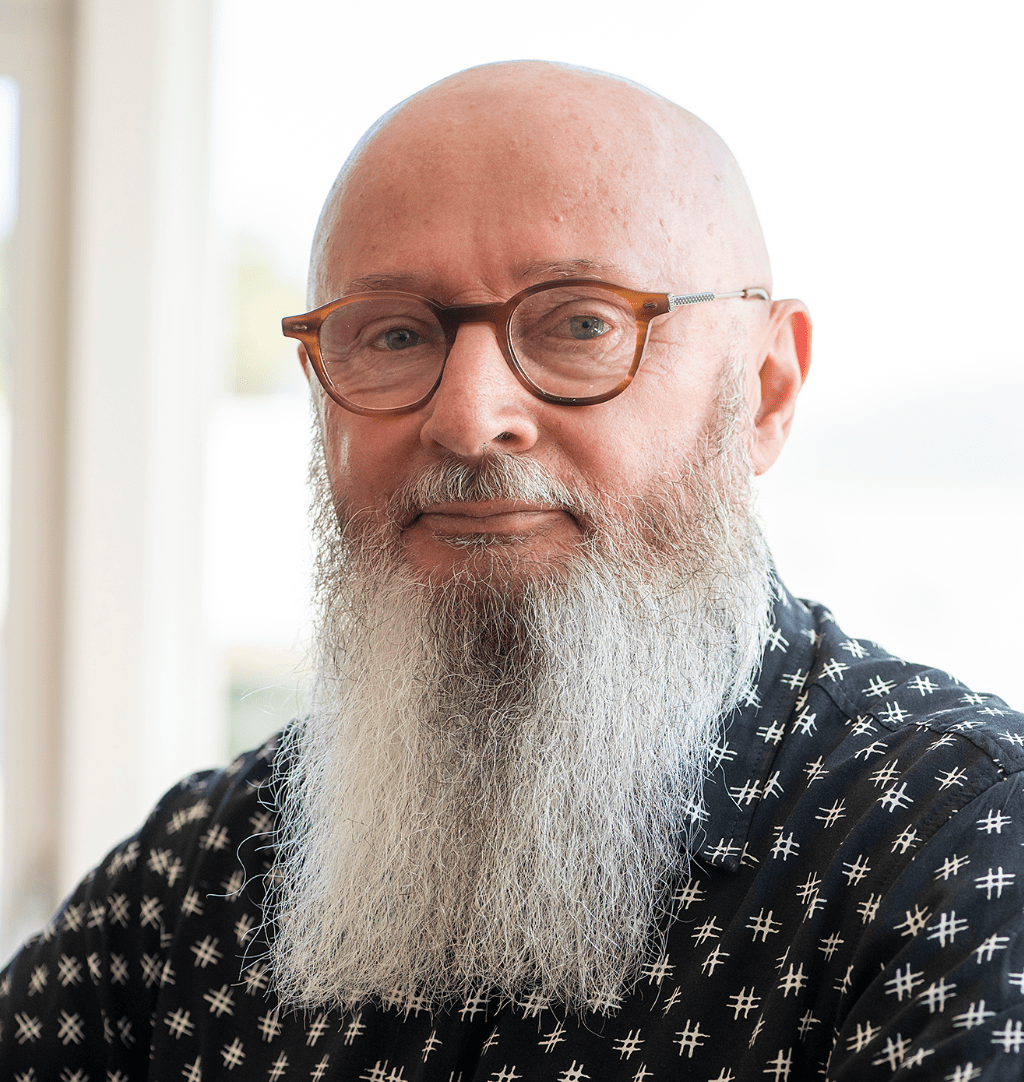
By John Hobbs
I undertook my Harkness scholarship over the 2001/02 period with two other New Zealanders, Rae Lamb, and Frances Hughes. My research was undertaken with the oversight of Professor David Bates of the Harvard Medical School.
I arrived in Boston in late August 2001 and found an apartment in the South End of Boston, which is a pretty swanky part of Boston. The best part of the day was prior to work when I would go to the Claremont Café across the street from my apartment before work. I would grab the New York Times, order a bagel, and cream cheese (lightly toasted) and a latte and sit down and read the news – this felt like bliss as I started my day.
My area of research was in the provision of e-health utilising various primary care innovations at the time, in particular the provision of doctor-patient health care via email. A defining moment of my Harkness was at our first get together as Harkness fellows at Harkness House in midtown Manhattan. It was early morning when someone came into the meeting room and whispered in Robin Osborne’s ear that a plane had gone into one of the Twin Towers.
We didn’t appreciate its gravity until that same person returned to say that one of the Twin Towers had collapsed. In shock, we went upstairs and witnessed the second Tower collapsing. Manhattan went into shutdown and I couldn’t get back to Boston for a few days. Rae used the opportunity to race down to Ground Zero to report on events from a New Zealand perspective. Frances and I went down to give blood the next day, but of course there was no need for blood.
Over the next year I was able to watch the US response to 9/11, attend many talks by people such as Noam Chomsky who were trying to make sense of the US response and its positioning in the world. At the same time I was doing research in a fabulous academic environment honing my research skills and in the process publishing four papers in peer-reviewed health journals. One of them related to the anthrax attack across the US trying to understand where people searched for trusted data on the risks.
This experience prepared me well to work within the health sector on my return. My main area of employment was in the Ministry of Health, which in turn provided me with the opportunity to work for three health Ministers and last, but not least, Minister Andrew Little when he was the Minister responsible for the response to the Royal Commission work on the Christchurch Terrorist Attack. I had been living in Palestine volunteering for Al Rowaad, a Palestinian NGO situated in the Aida Refugee Camp. It’s focus was on peace and conflict resolution through artistic expression. I studied Arabic in Bethlehem, Palestine; Amman, Jordan; and Beirut, Lebanon.
Building on my Harkness experience, I did a master’s degree in Peace and Conflict Studies (focusing on New Zealand’s foreign policy approach to the question of Palestine) and am now doing a PhD at the National Centre for Peace and Conflict Studies | Te Tumu School of Māori, Pacific & Indigenous Studies, Otago University. My PhD is focussing on how a decolonised New Zealand foreign policy might reframe our approach to international affairs, reflecting on New Zealand’s approach to the question of Palestine. I have written opinion pieces in the Otago Daily Times, Newsroom and E-Tangata, drawing on my PhD study.
Without a doubt, my Harkness experience proved invaluable in developing my research skills. Just as important, it gave me a deeper insight into the US’s engagement in international affairs. I have been able to use this experience to undertake my own research in foreign policy much later on after my return to New Zealand.
John Hobbs has been a career public servant, working in a number of government departments (most recently the Department of Prime Minister and Cabinet). He also worked for a number of Ministers on secondment from government agencies. He has a Master of Commerce (Hons) in Economics from the University of Auckland and a Master of Arts (Thesis) with Distinction in Peace and Conflict Studies, from the University of Otago. He is currently undertaking a PhD at the National Centre for Peace and Conflict Studies, Te Tumu School of Māori, Pacific and Indigenous Studies, Otago University.
References
The role of primary care non-physician clinic staff in e-mail communication with patientsInternational Journal of Medical Informatics
2004-05 | Journal article
DOI: 10.1016/j.ijmedinf.2004.02.004
Part of ISSN: 1386-5056
Contributors: A.F Kittler; J.S Wald; L.A Volk; L Pizziferri; Y Jagannath; C Harris; M Lippincott; T Yu; J Hobbs; D.W Bates
Source:
John Hobbs
Preferred source (of 2)
The Internet as a Vehicle to Communicate Health Information During a Public Health Emergency: A Survey Analysis Involving the Anthrax Scare of 2001
Journal of Medical Internet Research
2004-03-03 | Journal article
DOI: 10.2196/jmir.6.1.e8
Part of ISSN: 1438-8871
Contributors: Anne F Kittler; John Hobbs; Lynn A Volk; Gary L Kreps; David W Bates
Source:
John Hobbs
Communicating Health Information to an Alarmed Public Facing a Threat Such as a Bioterrorist Attack
Journal of Health Communication
2004-01 | Journal article
DOI: 10.1080/10810730490271638
Part of ISSN: 1081-0730
Part of ISSN: 1087-0415
Contributors: JOHN HOBBS; ANNE KITTLER; SUSANNAH FOX; BLACKFORD MIDDLETON; DAVID W. BATES; John Hobbs
Source:
John Hobbs
Opportunities to enhance patient and physician e-mail contact
International Journal of Medical Informatics
2003-04 | Journal article
DOI: 10.1016/s1386-5056(03)00007-8
Part of ISSN: 1386-5056
Contributors: John Hobbs; Jonathan Wald; Yamini S. Jagannath; Anne Kittler; Lisa Pizziferri; Lynn A. Volk; Blackford Middleton; David W. Bates

 HARKNESS