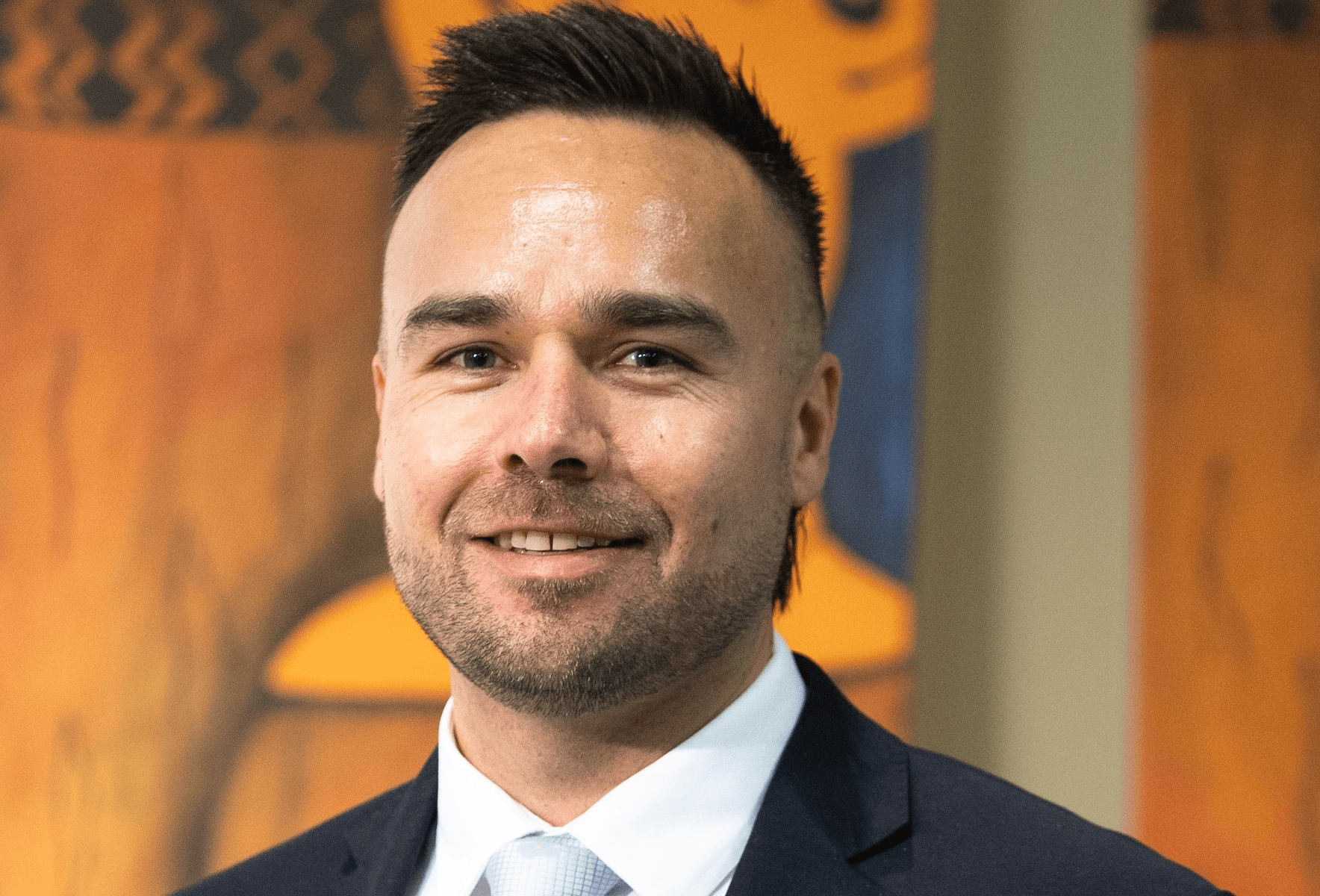
By Jacob (Hākopa) Ashdown
Why I applied for a Harkness Fellowship: Legacy, service, and going all-in
I was motivated to apply for the Harkness Fellowship because of the inspiring 100-year legacy built by many esteemed leaders who have set out on a journey of knowledge across the U.S and returned home enriched to serve and shape the fabric of New Zealand society.
This legacy is inspiring for those who want to make a difference through public service. Yet it is also daunting and comes with a responsibility to build upon the legacy of fellows gone before. That is no mean feat. It was not until after I had been awarded the fellowship and gathered with other fellows at the Centennial Celebration of the Harkness Fellowship in Wellington that the magnitude of that legacy set in.
I felt the added pressure to uphold that legacy and the discomfort that comes with the elevated profile from being awarded the title ‘New Zealand Harkness Fellow 2025’. The pressure and unease soon dissipated and excitement set in as I heard firsthand Harkness tales from fellows who warmly welcomed me into a network of great people who have gone out of their way to show support.
For those who are interested in making a difference, who want to challenge themselves, and who aspire to bring new ideas to public service, the Harkness Fellowship is for you. If you are considering applying, start your application well ahead of time, give it 100% and leave no stone unturned.
Before the Fellowship
My Harkness journey started well before the award letter arrived. One of the biggest hurdles in preparing my application was finding a host institution. At the time, I was working as a Private Secretary to the Minister for Māori Development, Hon Tama Potaka. I had become increasingly focused on economic development issues and decided that I wanted to focus on what policy lessons from the U.S we could apply in New Zealand to advance Māori economic development.
I shared my Harkness Fellowship ideas with Grace Smit (Deputy Secretary, Te Puni Kōkiri) who had taken the time to show interest in my professional development and offered to connect me with a previous Harkness Fellow and current Chair of the New Zealand Harkness Fellowships Trust, Aphra Green (Deputy Secretary, Social Investment Agency). Before I could arrange to meet with Harkness Fellowships Board Chair Aphra Green, fate intervened and we found ourselves in the Beehive lift together heading up to level 8 of the Executive Wing.
We had not met before, but I recognized Aphra and introduced myself (uncommon practice in the Beehive elevator) and we went for a coffee and chat in the Beehive café. Aphra shared what the Harkness Fellowship is about and offered a few tips for preparing the application, including how to find a host institution. It was a simple, but proven method – send an email.
After weeks of researching online, I found a paper authored by Professor Joseph Kalt, Ford Foundation Professor (Emeritus) of International Political Economy at the John F. Kennedy School of Government (HKS) at Harvard University and co-founder of the Harvard Project on Indigenous Governance and Development. I sent him an email, and he connected me with Dr Miriam Jorgensen. To my surprise, she responded almost immediately and agreed to meet online, which led to a formal letter of invitation to be hosted at the HKS Ash Center for Democratic Governance and Innovation where the Harvard Project on Indigenous Governance and Development is based.
It was not until weeks after being awarded the Harkness Fellowship following a successful interview that I realised how deep the Harkness Fellowship connections are. Over coffee with Whaimutu Dewes (Harkness Fellow and HKS alumnus) he shared with me how he was supervised by Professor Kalt. Peter Douglas (another Harkness Fellow and HKS Alumnus) also learned from Professor Kalt and Dr Jorgensen was his economics lecturer. It was only through pursuing my research objectives that I came across my Harvard hosts and stumbled blindly into a web of longstanding US – NZ relationships.
My excitement for the journey ahead was growing until I faced my next hurdle – getting a visa. On the 4th of June 2025, President Trump issued a proclamation: “Enhancing National Security by Addressing Risks at Harvard University”. The proclamation and the Trump Administration’s pause on certain visas meant that I and many others globally were in limbo while court proceedings played out. I had a back-up plan but was determined to go to Harvard and delayed my travel until the visa pathway cleared. Eventually, visa processing recommenced, and I was on my way to the US Consulate in Auckland.
During my visa interview, the Consular Officer asked with a cheeky grin on his face, “why would you want to go to Harvard?”, followed by a brief pause, the sound of a stamp, and words of relief: “Your visa has been approved, subject to enhanced social media screening checks”. Two weeks later my visa arrived and before I knew it, I was on a plane.
First stop: Gun Lake Casino, Grand Rapids, Michigan. But not for the reasons one might think.

 HARKNESS