HARKNESS
FELLOWSHIPS TRUST

Developing leadership talent vital, says Prime Minister John Key
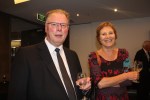
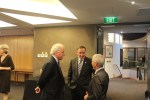
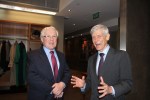
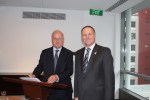
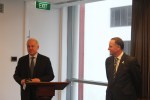
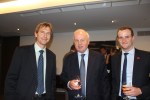
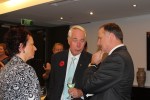
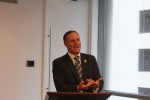
On November 25th, the Harkness Fellowship Trust hosted Prime Minister John Key, senior government officials and past Harkness fellows at a cocktail function to celebrate the recent $2 million investment by the Leadership Development Centre in the future of the fellowships.
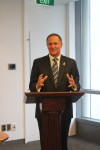
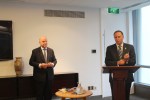
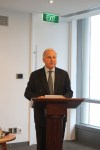
In a speech to the assembled fellows, the Prime Minister outlined the importance of offering opportunities for future leaders in the public sector, business, science, academia and other areas of society, to gain experience and pursue research projects overseas. The Harkness Fellowship Trust will in the New Year, open a call for applicants for the next Fellowship.
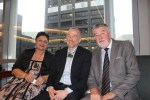
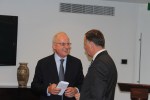
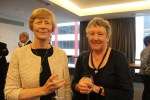
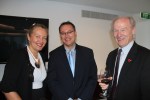
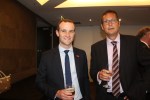
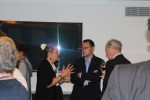
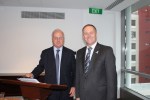
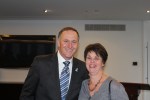
See below for a gallery of images taken at the cocktail function, held at the Wellington Club.










Harkness Fellowships Trust welcomes Government investment
The Chairman of the NZ Harkness Fellowships Trust Board, Ross Tanner, has welcomed the announcement by Iain Rennie, State Services Commissioner and Chair of the Board of the Leadership Development Centre, that the Government is to make a $2 million investment in the Trust Board’s Harkness Fellowships programme.
 “We are very grateful to Public Service chief executives, and to the Leadership Development Centre, for this generous endowment”.
The Harkness Fellowships programme has over the last sixty years enabled mid-career professionals who aspire to significant leadership roles within New Zealand, particularly in but not limited to the public sector, to benefit from new ideas, practices and contacts in the US.
The purpose of the Fellowships is to reinforce New Zealand-United States links by enabling aspiring leaders to benefit from a programme of personal study at a US research institution or other organisation.
The Fellowships will also:
- Enhance the cross-fertilisation of ideas and experience between New Zealand and the United States;
- Build a connected leadership network on both sides of the Pacific based on enduring relationships, with benefit to both countries; and
- Build a partnership with the Leadership Development Centre, on behalf of the public sector, to build leadership capability within the public sector in NZ.
Applications for the 2015 Fellowships will be sought later this year.
Questions and answers
1. What are the Harkness Fellowships?
From 1922, The Commonwealth Fund of New York, a philanthropic enterprise established by the Harkness family in 1918, provided Fellowships to enable outstanding graduate students from the UK to spend up to 21 months in the United States to pursue post-graduate training or research.
Following the conclusion of WW2, in the early 1950’s the Fellowship programme was extended to mid- career professionals from a range of countries, including Australia, New Zealand and some continental European countries.
The Fellowship programme in New Zealand has supported over 100 talented people to pursue study and research programmes in the US. Many have gone on to become leaders in their profession and to make outstanding contributions to science and technology, health care and education, economics and public sector leadership.
In 1996, the Board of the Commonwealth Fund decided to focus the Fellowships on health care policy and practice, which was in fact more in keeping with the overall purpose of the Fund itself.
Mindful that the original Harkness Fellowships had enabled a generation of young emerging leaders from both the public and private sectors in New Zealand to benefit from what was a life-changing experience in the United States, a group of New Harkness alumni established The New Zealand Harkness Fellowships Trust (Inc), by a trust deed on 12 December 1997, to support ‘general purpose’ fellowships.
The establishment of this Trust, and its intent to award additional Fellowships for tenure in the US, was endorsed by the Commonwealth Fund. The Trust Board has since inception received strong administrative support from The New Zealand–
United States Educational Foundation, Fulbright New Zealand.
In 2009 the Trust Board resolved to allocate some of its capital each year to support a limited term Fellowship for tenure in the United States, to enable emerging New Zealand leaders in any field of study or vocation (excluding health care policy and practice) to study or research in the US.
Four New Zealand Harkness fellows have since been awarded Fellowships to travel to the US.
2. What is the purpose of the NZ Harkness Fellowship?
The purposes of the Fellowship are to:
• Provide a catalyst for those aspiring to significant leadership roles within New Zealand by enabling them to benefit from new ideas, practices and new contacts in the US.
• Reinforce New Zealand-United States links by enabling these emerging leaders to benefit from a programme of personal study within a stimulating environment while establishing long term relationships;
• Enhance the cross-fertilisation of ideas and experience between New Zealand and the United States; and
• Build a connected leadership network on both sides of the Pacific based on enduring relationships, with benefit to both countries.
3. Who is eligible?
It is anticipated that two Fellowships a year will be awarded, providing there are candidates of excellence who meet the criteria. Applications are open to those from all backgrounds in New Zealand, but one Fellowship annually will be devoted to applicants who have a career focused upon the public sector. There is no fixed age limit but preference is given to applicants in the 25-45 year age range.
4. Who are former Fellows?
Previous New Zealand Harkness Fellows have included managers in the public and private sectors, lawyers, policy analysts, economists, academics, journalists, social scientists, educators, artists, and central and local government officers. A selection of former Fellows includes:
- Dr Roger Blakeley (former Secretary for the Environment, and Secretary of Internal Affairs), is currently Chief Planning Officer for the Auckland Council, responsible for the Auckland Plan
- Jo Brosnahan is Director of Leaders for the Future, and Chair of Hunter Downs Development Co Ltd, and Northpower Fibre
- Rob Cameron is Managing Director of Cameron Partners, an investment banking and private equity firm
- Peter Douglas is Chief Executive of Te Ohu Kai Moana, the Treaty of Waitangi Fisheries Commission
- Whaimutu Dewes, is Managing director at Whainiho Developments Ltd and a prominent Maori professional director. He is a member of Treasury’s Advisory Board
- Professor Richard Faull, is a world renowned neuroscientist at the Auckland University Medical School
- Professor Cynthia Farquhar, Department of Obstetrics and Gynaecology, National Women’s Hospital, Auckland, New Zealand is a leader in women’s health research
- Hugh Fletcher, is former Chief Executive of Fletcher Challenge, and a prominent businessman
- Kay Harrison is Manager, International Climate Change and Environment Policy, Ministry for the Environment
- Peter Hughes is currently Secretary of Education, and former CE of the Ministry of Social Development
- Andrew Kibblewhite is Chief Executive of the Department of Prime Minister and Cabinet
- Hon. Shane Jones is former MP, and now Pacific Economic Ambassador.
- Bridget Liddell, Managing Principal of Fahrenheit 212 Equity, provides leadership to companies seeking to successfully commercialise their products and services in the US.
- Dr Margot McLean, is Medical Officer of Health, Hutt Valley District Health Board
- Dr Murray Milner is a former chief engineer at the Post Office and currently chair of the National Health IT Board
- Professor Ron Paterson, is currently an Ombudsman. He was formerly Professor of Law at Auckland University, and a highly regarded Health and Disability Commissioner
- Dr Karen Poutasi, is former Director General of Health, currently CE of the NZ Qualifications Authority
- Kara Puketapu, is a leader of the Te Āti Awa iwi in Waiwhetū, Lower Hutt. He is a former Secretary of Maori Affairs
- Sir Bruce Robertson is a retired judge of the Court of Appeal and chairman of the Law Commission
- Ross Tanner, a former Deputy State Services Commissioner, is currently a professional director and consultant
- Neville Trendle, former Assistant Commissioner of Police, is now a member of the Parole Board
- Dr Bryce Wilkinson, Director of Capital Economics, is a widely recognised economic researcher and commentator.
Remembered: Ian Baumgart 1920 – 2013
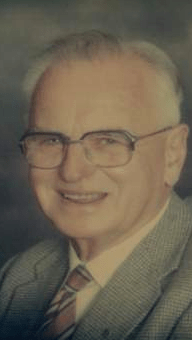
by Ross Tanner
The longevity of the Harkness fellowships means that sadly, from time to time, we have to farewell old friends and fellows.
One such Fellow, Ian Baumgart QSO, died on Friday 27 September, 2013 at Riverleigh Rest Home in Lower Hutt.
Ian was the Harkness Representative in New Zealand for many years, and in that capacity served as the Chairman of the Selection Panel for many of us who were awarded Fellowships. He and his wife Nesta have been regular attendees at our annual dinners in recent years.
Ian began his career as a soil scientist at the Department of Scientific and Industrial Research (DSIR). He was quickly promoted to head office in Wellington as Senior Principal Scientific Officer and later to Assistant Director General of the DSIR, where he played a significant role in determining the shape and direction of agricultural and biological research in New Zealand.
In 1962 he was awarded a Harkness Fellowship to study the administration of science at the Brookings Institution in Washington DC. In 1973 he became New Zealand’s first Commissioner for the Environment.
Upon his retirement in 1980, Ian took on several UN and OECD contractual assignments which involved working in advancing environmental and scientific organization and management programs in various African and Pacific Island countries.
For many years he was an elder in the Presbyterian church, active in local charity activities, president of the Western Hutt Rotary Club, Chairman of the Animal Ethics Advisory Committee, Deputy Chairman of the National Research Advisory Council, and Chairman of the Toxic Substances Board . He was a recipient of the Royal Society of New Zealand Thompson Medal for service to New Zealand science, the Queen’s Jubilee Medal and the Queens Service Order (QSO).
His funeral service was held at St Mark’s Church, Woburn Road, Lower Hutt on Wednesday, 2 October, 2013.

 HARKNESS