HARKNESS
FELLOWSHIPS TRUST
From Facebook to the marae
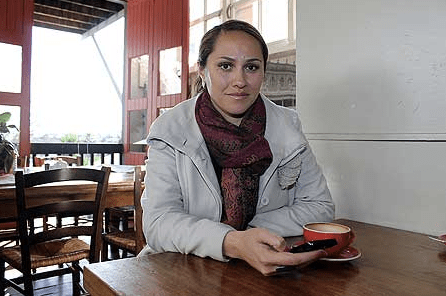
Dr Acushla Dee O’Carroll’s Fulbright-Harkness Fellowship research trip to the US in 2013 examined how native Hawaiians and First Nation American indigenous groups use social networks to revitalise and preserve their culture.
Read this Q&A interview to find out more about Dee.
1. In September you departed for the US on your Fulbright-Harkness Fellowship. What research questions did you set off to answer and what did you discover?
The Fulbright-Harkness project set out to investigate how Indigenous peoples in the USA (i.e., Hawaiian and Native American peoples) are using SNS (social networking services). The research aimed to highlight how Indigenous peoples in the USA are navigating and negotiating virtual spaces of SNS for cultural revitalisation and preservation.
It was the hope of the researcher/recipient that this research project would contribute to an under-researched area of study and add new Indigenous insights through providing comparatives and narratives alongside what Māori are doing in the area of culture and social media (which has derived from my doctoral work).
This research project intended to build on the small number of existing scholarship to assist policy makers, educators and cultural practitioners (locally and globally) with powerful insights into the ways in which technology and traditions are fusing together.
The research questions for the project were to;
1. Explore and analyse how Native Hawaiian and First Nation American Indigenous groups are using SNS in cultural ways;
2. Examine and discuss the implications of such Indigenous SNS use in relation to how Māori use SNS, highlighting the similarities and differences; and
3. Investigate community-driven SNS-based strategies for cultural and language revitalisation in communities.
The scope of this research was to gauge how Indigenous communities of the US are engaging with SNS and in considering the impacts on people and culture. It was intended that case studies would be conducted to incorporate a range of diverse generational discussants who were able to provide some insight into how their community/organisation thinks about and understands SNS in relation to Indigenous identity, language, traditions and values.
A bald eagle flew across the beach where we stood, stopped mid flight as if to greet and acknowledge us, swooped into the water to retrieve a fish and then retreated to the beach to feast. The elders of the tribe said that this was an extremely good sign and that our visit to their reservation was honoured by the eagle, who is one of their deities.
2. What were some of the findings of your recent research trip to Hawai’i and Seattle as the 2013 Fulbright-Harkness Fellow?
The significant findings of my research project as part of the Fulbright-Harkness are wide-reaching and continue to be formulated into a publishable paper that is currently underway. Broadly speaking, I was able to present my research to present to over 11 institutions and organisations, met with over 16 individuals and groups to discuss the research in more depth and conducted over 13 interviews with Indigenous users of SNS.
Some of the findings of those interviews discussed the following;
Hawai’i
• My research generally raised the awareness amongst Hawaiian communities that social media as a new technology requires much more attention (and research) that what it is currently receiving to ensure that Hawaiian culture and society moves with new media while continuing to keep traditions in tact.
• There are some interesting things happening in social media for Hawaiian language and the promotion of the language. Social media is increasingly becoming a space in which Hawaiian language is being taught and learnt.
• Cultural protocols such as funerals were not generally spoken about as being observed in social media, this may have been due to the limited number of interviews and people I spoke with. However, sharing my research around virtualising funerals and other Māori protocols prompted many Hawaiian communities to reflect and consider how social media is playing or will play a role in the practising of their cultural protocols.
• Social media like Facebook and Twitter were excellent platforms in which political agendas from a minority group (Hawaiian people) were enforced, voiced and mobilised through these media. These media were considered empowering as they gave the people a voice.
• Cultural traditions around hula were being kept in tact through the use of social media. “Tikanga” were being enforced through social media controlled Facebook pages for hula dancers and hula schools, which meant that hula could be taught, learnt, and organised using social media.
Seattle
• There are a good number of research projects that are just starting to emerge from the US from Native American scholars around this area of research, which is exciting, as there is very little Indigenous research in this field.
• Native American people are doing some extremely interesting things in social media around language revitalisation and in particular, using social media platforms as ways to coordinate and organise groups of people for political movements. The Idle No More campaign as being one of the major social media movements to occur in the past few years.
• Cultural events such as the ‘Canoe Journey’ that happens every year amongst tribes in the Washington State area use social media considerably, to organise cultural events and meetings around this large event occasion. Social media is also used during the event to allow other Native American people across the continent to participate and engage in the event through social media.
• Native American Youth are being targeted through social media by influential musicians (who are Native American) who are making efforts to inspire young people. The use of video and images are being used here also.
• Cultural practices such as funerals were not been widely observed in Native American communities (this may, again, be due to the limited data sample) but note some interesting protocols being virtualised and raising concerns amongst communities.
3. What is your favourite memory of Hawaii?
Hawai’i
During my stay in Hawai’i, I made an effort to travel to the outer islands of Kaua’i, Maui and Big Island to meet with people and discuss my research, but to also experience Hawai’i and the Hawaiian culture in some of the older, less populated islands of Hawai’i.
I visited Kaua’i with a few close Hawaiian friends who showed me the island. I was fortunate to stay with an elder who shared many stories and accounts of her time growing up in Hawai’i and sharing in discussion and conversation about the future of Indigenous peoples and how we as leaders of tomorrow play an integral role in securing the future for our generations to come.
Being amongst such an incredible group of inspiring, young and Indigenous agents of change brought an entirely new level of appreciation for this trip and this opportunity. I felt truly connected to my Indigenous brothers and sisters and shared hopes and dreams that we each have for our respective tribes and that together, working in unity and solidarity as Indigenous people, we can achieve this. I also visited Maui and Big Island, where I had similar experiences and conversations with inspiring Hawaiian youth and elders.
Throughout this trip, I also gained an increased appreciation for having a sense of place and a sense of belonging (which I explore in depth within my doctoral studies and how social media plays a role in facilitation that connection to ‘place’). Land and water and connecting to ones environment and place of origin was firmly instilled in my experience in Hawai’i as I observed my Hawaiian brothers and sisters speak about the importance of land for food sovereignty and the mana that they must continue to uphold in regards to their land and water.
These sentiments are of course shared by Māori and I understand them well, however it became much more apparent to me of the issues that we as Indigenous people face and will continue face in our lifetimes around the protection and continuity of our natural resources and how important that responsibility is for us as the leaders of tomorrow, to continue so that there is something left for our children of tomorrow.
Amongst a number of cultural experiences around hula, mele Hawai’i (Hawaiian music), receiving some tā moko (Māori tattoo) while I was in Hawai’i and rekindling old friendships and making new ones – my trip to Hawai’i was profound and unforgettable. I am truly appreciative of the opportunity to have returned to Hawai’i as a Fulbright-Harkness fellow and feel that this latest trip has provided pivotal changes in my life as a researcher and as an Indigenous person.
Seattle
Admittedly, Seattle was where I worked the most in terms of scheduled meetings, presentations and interviews that were happening most of the day, everyday for the three weeks that I was there. Which was fantastic, as I was able to collect a lot of data and share my research with all who were interested. I did however; find some time to visit a couple of cultural places of significance.
One in particular was the Sklallam Reservation where I visited as part of a group of Native Indigenous scholars from the University of Washington. We visited the reservation as part of a day of activities making artworks from cedar wood. These artworks would be used as gifts for elders and dignitaries who were scheduled to visit the University in October of this year. The visit included sharing in story telling by elders of the trip about the history of the their tribe and the their lands.
We then smoked salmon over the fires on the beach of their reservation. During this time, I was privileged to witness something truly special. A bald eagle flew across the beach where we stood, stopped mid flight as if to greet and acknowledge us, swooped into the water to retrieve a fish and then retreated to the beach to feast. The elders of the tribe said that this was an extremely good sign and that our visit to their reservation was honoured by the eagle, who is one of their deities. I was truly humbled to have witnessed this!
There were many cultural experiences where I felt like I was at home in Aotearoa with my own people, practising my own customs. I truly felt the connection between Indigenous peoples through this trip and my time in Seattle and this experience added so much value to my appreciation of Indigeneity.
There were a plethora of other cultural experiences, but generally felt that I was on a spiritual journey throughout Hawai’i and Seattle as I encountered both professional and personal engagements and experiences – truly a once in a lifetime experience!
4. What is next for you?
I am undergoing the writing of a paper using some of the data that I collected from my Fulbright-Harkness fellowship, I have also just received a Writers Fellowship to continue writing articles deriving from my PhD. Meanwhile, I am in the process of setting up my own business (Māori Research Consultancy).
Native American people are doing some extremely interesting things in social media around language revitalisation and in particular, using social media platforms as ways to coordinate and organise groups of people for political movements.
The future of journalism

Our 2012 Fulbright-Harkness Fellow, Peter Griffin went coast to coast across the US to visit centres of excellence in public interest journalism. He found innovative examples of journalism and funding schemes that could be applied on a smaller scale in New Zealand…
1. You recently published research based on your US trip – what does the paper cover?
My paper Big News in a Small Country was published in Pacific Journalism Review and examines whether a small centre for independent public interest journalism would work in New Zealand. First I lay out the problem – the fact that the mainstream media’s ability to undertake investigative journalism has diminished as the business model it has relied on for so long collapses. Then I look at the rise of new centres that have set up in the US to plug the gaps, undertaking investigations and leveraging new tools in data journalism to break major stories of national significance. The US is years ahead in this trend and there is much we can learn from them. The key thing is that these organisations have not been set up to compete with the mainstream media. They partner with news outlets to publish the results of their investigations. It simply means that more resources are going into tackling the hard, expensive stories, the ones that make a big difference – and win Pulitzer prizes!
We need to make the case that certain aspects of journalism warrant deep-pocketed philanthropists and regular news readers alike to chip in to pay for it, according to their means and unavoidably, in line with what they are particularly interested in.
2. Where did you go in the US – what were the highlights?
This was a dream opportunity as it allowed me to visit all the places I have watched with awe from afar. In New York I spent time at Propublica, the most famous of the independent public interest journalism start-ups. They are based in lower-Manhattan and have across the board, from the financial sector to the environment, they have broken major stories in conjunction with partners like the New York Times and NPR Radio.
In Washington I visited the Center for Public Integrity which has been around nearly 25 years and carefully monitors thew money flows in and out of government. They are the experts at tracking how public money is used and misused and the team there have their work cut out for them with the rise of supoerPACs – political action committees that channel hundreds of millions of dollars into political attack ads and campaign funds. This is having a major influence on politics in the US and often tracking where the money comes from is a real headache.
In Los Angeles I visited the Center for Health Reporting which is an interesting organisation because it is solely focussed on health-related issues in the state of California.
All of these organisations work slightly differently and have differing funding models. But they are making a big impact their own ways and attract millions in funding each year.
The real highlight of the trip was attending President Obama’s second inaugural speech on the Mall in Washington D.C. It was a cold day, but hundreds of thousands turned out to hear what the President had to say and while it wasn’t the euphoric mood that the president enjoyed the first time he gave that speech, he delivered a forceful, inspiring speech that made it clear he had unfinished business and planned to make the most of his second term. But US politics is brutal and even on important issues like climate change he is having to fight his political opponents every inch of the way.
3. Could we build a mini Propublica in New Zealand?
My visits to Propublica in New York and the Center for Public Integrity in Washington D.C. convinced me that a mini version of either of these great organisations will be hard to pull off in a tiny market like New Zealand.
Instead, we are going to have to go for a less resource-intensive, more grassroots start-up – at least initially.
Expecting foundations, philanthropists or the general public to chip in to fund a bunch of journalists to do worthy but unidentified journalism projects won’t work here where we don’t have billionaires willing to write out checks for millions of dollars in the name of quality public-interest journalism (ala Propublica).
What we do have are people that are willing to chip in to fund good journalist that has impact. Keith Ng proved this last year when his virtual tip jar quickly filled up following his revealing of serious security flaws in the Government’s Work and Income computer terminals.
Since then security breaches in government IT systems have been revealed on almost a weekly basis, showing systemic problems with how government departments store, access and share information.
PublicEyes will have to show its hand to gain support of the type Ng enjoyed. What are the issues that New Zealanders want to see journalists digging deeper into?
Is it environmental issues like fracking activity in New Zealand or the impact of industry on water quality? Is it the influence the hundreds of lobbyists in Wellington have on government, or the impact of powerful grocery or pay TV monopolies or duopolies in a small market? What are working conditions like in some of our more dangerous industries, such as forestry and manufacturing? How transparent and efficient are our councils in the way they operate?
The projects will need buy-in from the public to get off the ground, in the same way that Propublica’s high-impact projects attract foundation support – rather than Propublica in its own right.
4. What would be required to get PublicEyes off the ground?
For PublicEyes to work effectively it will need the following:
– Not-for-profit status – to reassure everyone that Alastair and co are not in this for the money, to lower its cost structure and to enable donors to receive tax benefits for contributing.
– A strong and credible governance structure that provides good oversight and maintains a rigid separation between funding activities and the editorial aspects of the investigations being funded. An independent editorial advisory board should also be formed to separately consider projects for funding.
– Partnerships with established media outlets which it can team up with to break stories that result from PublicEyes-funded investigations.
– A user-friendly way to donate to Scoop Foundation online – and to let others know of your worthy donation (think Kiva.org).
– A secure and trusted way for whistle blowers and concerned citizens to send story tips to PublicEyes.
5. Many of the journalism centres you visited in the US are funded by philanthropists. Is it realistic to expect such support for journalism in New Zealand?
The appetite for this type of giving is hard to gauge. But here’s how I see it – in 2011 New Zealanders gave an estimated $2.6 billion in philanthropy. That’s every sort of philanthropy – from corporate giving to community trusts to donations dropped in collection buckets on street corners. The majority of that (nearly $1.6 billion) is individual giving.
If a public interest journalism foundation could capture just 0.001 per cent of that philanthropic spend that would equate to $260,000 that could be spent on investigative and data journalism projects. That’s enough to make a difference, cast light on three to four important and worthy issues every year.
I think it is achievable, but it is new. Journalism is not seen as a charity case. But that is changing. The public is beginning to realise that the media’s capability is vastly reduced. We need to make the case that certain aspects of journalism warrant deep-pocketed philanthropists and regular news readers alike to chip in to pay for it, according to their means and unavoidably, in line with what they are particularly interested in. That’s the challenge we face but the one that needs to be addressed early in the effort to get an independent vehicle for public interest journalism off the ground in New Zealand.
Ambitious mathematics teaching
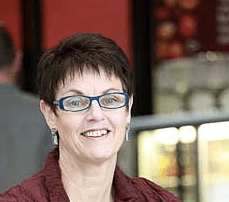
A quest to research effective ways of teaching mathematics took Professor Glenda Anthony to the United States as the 2011 Fulbright-Harkness New Zealand Fellow. Based at the University of Washington, Professor Anthony learned how teachers are organising their classrooms as mathematical learning communities where students support and engage with each other’s mathematical thinking in respectful ways.
1 How did your time in Seattle change your thinking about ways to approach preparing teachers to teach mathematics?
Working alongside US researchers from the Learning in, From, and For Teaching Practice project I experienced first-hand the power of providing prospective teachers the opportunity to practise a range of high-leverage instructional practices (e.g., listening and responding to learners’ mathematical thinking, connecting mathematical ideas, and facilitating mathematical discussions) by using public rehearsal activities.
No longer content to teach prospective teachers about what effective teaching ‘looks like’ in theory, I am now committed to learning to become better at teaching prospective teachers learn the work of effective teaching practice. To this end I am currently researching ways to utilise ‘practice-based’ approaches that supports prospective teachers to not only ‘think’ like teachers, but also to put what they know into action.
2. You were a high school mathematics teacher. What do you think is the key to getting kids excited about so-called STEM subjects including mathematics?
The key to getting kids excited about STEM subjects is to not let them become ‘unexcited’. Children are naturally curious and excited about learning, Mathematics, technology and science subjects offer ways for children to explore, understand, and structure their informal everyday experiences.
With mathematics in particular, we need to start with building learning experiences around young children’s understandings by providing lots of opportunities to “play” with numbers, patterns and shapes. Children who are supported to make sense of the mathematics, who are part of a collaborative learning community, and who are positioned as competent, will more likely maintain an interest in and develop positive beliefs about themselves as mathematics learners.
I was in the US over the Halloween period. Halloween night involved a community street party, complete with an early snow fall – a particularly unique experience. Pumpkin lattes at Starbucks provided the complete package!
3. What is “ambitious teaching” and what did you learn about it during your time at the University of Washington in Seattle?
Ambitious mathematics teaching is focused on ambitious outcomes. Not content to focus on getting right answers, teachers using ambitious mathematics teaching want all students to develop positive relationship with mathematics. They organise their classrooms as mathematical learning communities where students support and engage with each other’s mathematical thinking in respectful ways.
Moving mathematics learning experiences away from individual, competitive and completion focus type activities towards more collaborative-based activities requires that teachers support the explicit development of mathematical practices of conjecture, explanation, and justification. In making students’ mathematical discourse and thinking the building block of instruction, collaboration becomes more than a token sharing of ideas; it becomes a means to extend the thinking and learning.
This kind of teaching is ambitious in the sense that teachers need to encourage students to be willing to reason and make decisions about what procedures to use while solving problems, and this requires a different type of social management that is not necessary when students are simply expected to follow directions. During my time at the University of Washington, I worked with the prospective teachers as they trialled their in-class learning of instructional activities with small groups of children in a multi-cultural community school setting.
The challenge for these beginning teachers was to learn how to structure their interactions with children to focus on mathematical goals while managing different levels of competence and interest, while also attending to all students maintaining a productive disposition towards the subject. Video recordings of each teaching session were analysed by groups of teachers as a way of supporting their ongoing learning of ambitious teaching practices.
4. Favourite memory from your time in the US?
I was in the US over the Halloween period. Each day on my walk to the university I would note the newly decorated front porches and gardens of the houses. For Halloween day itself, I was staying in Boston and was fortunate to visit Salem with another New Zealand Fulbright colleague and see Salem in its full ‘witchery’ mode.
Halloween night involved a community street party, complete with an early snow fall – a particularly unique experience. Pumpkin lattes at Starbucks provided the complete package!
5. What are you currently working on?
Since the Fulbright I have travelled to the Kingdom of Saudi Arabia to work with mathematics educators on teaching practices and curriculum developments, and currently I am working in Indonesia within a project involving internationalisation of tertiary curriculum.
My principal research on returning to New Zealand involves leading a three year Teaching and Learning Research Initiative project funded by the New Zealand Council of Educational Research. Working with a team of mathematics educators from Massey University and Victoria University of Wellington, the project builds directly on the Fulbright experiences related to innovative ways to support teachers learn the work of ambitious mathematics teaching.
We have integrated teaching rehearsals and school enactment cycles as a way of supporting teachers learn the relational teaching practices associated with ambitious mathematics teaching. Developing new ways of teaching – for example coaching during rehearsals – and collaborative inquiry into our own practice and knowledge as teacher educators has been a rewarding experience.
This year the Massey University team was awarded a university-based Teaching Excellence and Innovation Award in recognition of the impact of our research and reforms on the preparation of mathematics teachers. As part of the project we are presently working with a small sample of our graduate teachers as they transition into the classroom workplace. We are interested in understanding how beginning teachers ‘try out’ different practices, and in their decisions regarding the integration of patterns of practice within their school environment into their teaching repertoires.

 HARKNESS