HARKNESS
FELLOWSHIPS TRUST
The Harkness Fellowship journey begins well before departing for the US
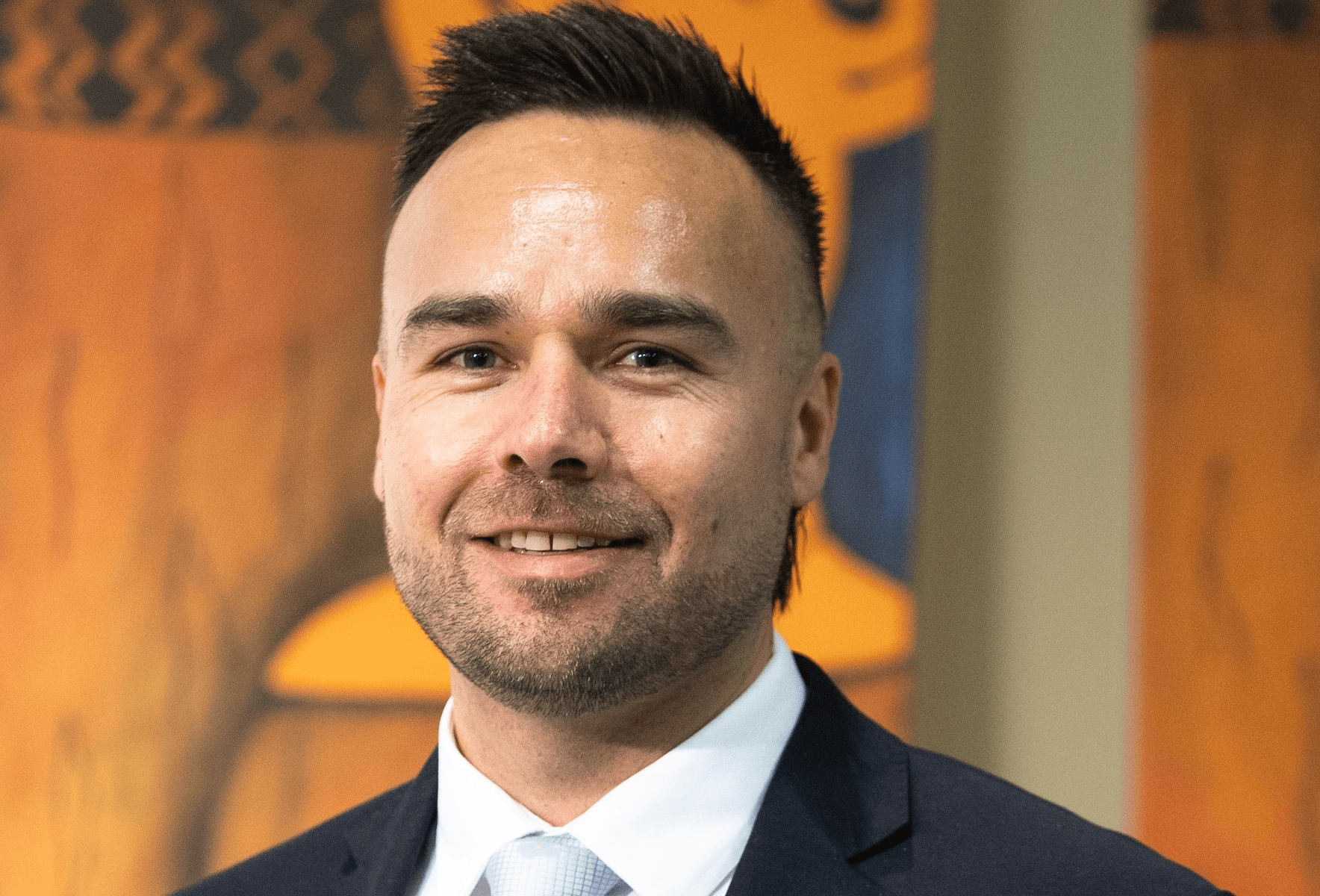
By Jacob (Hākopa) Ashdown
Why I applied for a Harkness Fellowship: Legacy, service, and going all-in
I was motivated to apply for the Harkness Fellowship because of the inspiring 100-year legacy built by many esteemed leaders who have set out on a journey of knowledge across the U.S and returned home enriched to serve and shape the fabric of New Zealand society.
This legacy is inspiring for those who want to make a difference through public service. Yet it is also daunting and comes with a responsibility to build upon the legacy of fellows gone before. That is no mean feat. It was not until after I had been awarded the fellowship and gathered with other fellows at the Centennial Celebration of the Harkness Fellowship in Wellington that the magnitude of that legacy set in.
I felt the added pressure to uphold that legacy and the discomfort that comes with the elevated profile from being awarded the title ‘New Zealand Harkness Fellow 2025’. The pressure and unease soon dissipated and excitement set in as I heard firsthand Harkness tales from fellows who warmly welcomed me into a network of great people who have gone out of their way to show support.
For those who are interested in making a difference, who want to challenge themselves, and who aspire to bring new ideas to public service, the Harkness Fellowship is for you. If you are considering applying, start your application well ahead of time, give it 100% and leave no stone unturned.
Before the Fellowship
My Harkness journey started well before the award letter arrived. One of the biggest hurdles in preparing my application was finding a host institution. At the time, I was working as a Private Secretary to the Minister for Māori Development, Hon Tama Potaka. I had become increasingly focused on economic development issues and decided that I wanted to focus on what policy lessons from the U.S we could apply in New Zealand to advance Māori economic development.
I shared my Harkness Fellowship ideas with Grace Smit (Deputy Secretary, Te Puni Kōkiri) who had taken the time to show interest in my professional development and offered to connect me with a previous Harkness Fellow and current Chair of the New Zealand Harkness Fellowships Trust, Aphra Green (Deputy Secretary, Social Investment Agency). Before I could arrange to meet with Harkness Fellowships Board Chair Aphra Green, fate intervened and we found ourselves in the Beehive lift together heading up to level 8 of the Executive Wing.
We had not met before, but I recognized Aphra and introduced myself (uncommon practice in the Beehive elevator) and we went for a coffee and chat in the Beehive café. Aphra shared what the Harkness Fellowship is about and offered a few tips for preparing the application, including how to find a host institution. It was a simple, but proven method – send an email.
After weeks of researching online, I found a paper authored by Professor Joseph Kalt, Ford Foundation Professor (Emeritus) of International Political Economy at the John F. Kennedy School of Government (HKS) at Harvard University and co-founder of the Harvard Project on Indigenous Governance and Development. I sent him an email, and he connected me with Dr Miriam Jorgensen. To my surprise, she responded almost immediately and agreed to meet online, which led to a formal letter of invitation to be hosted at the HKS Ash Center for Democratic Governance and Innovation where the Harvard Project on Indigenous Governance and Development is based.
It was not until weeks after being awarded the Harkness Fellowship following a successful interview that I realised how deep the Harkness Fellowship connections are. Over coffee with Whaimutu Dewes (Harkness Fellow and HKS alumnus) he shared with me how he was supervised by Professor Kalt. Peter Douglas (another Harkness Fellow and HKS Alumnus) also learned from Professor Kalt and Dr Jorgensen was his economics lecturer. It was only through pursuing my research objectives that I came across my Harvard hosts and stumbled blindly into a web of longstanding US – NZ relationships.
My excitement for the journey ahead was growing until I faced my next hurdle – getting a visa. On the 4th of June 2025, President Trump issued a proclamation: “Enhancing National Security by Addressing Risks at Harvard University”. The proclamation and the Trump Administration’s pause on certain visas meant that I and many others globally were in limbo while court proceedings played out. I had a back-up plan but was determined to go to Harvard and delayed my travel until the visa pathway cleared. Eventually, visa processing recommenced, and I was on my way to the US Consulate in Auckland.
During my visa interview, the Consular Officer asked with a cheeky grin on his face, “why would you want to go to Harvard?”, followed by a brief pause, the sound of a stamp, and words of relief: “Your visa has been approved, subject to enhanced social media screening checks”. Two weeks later my visa arrived and before I knew it, I was on a plane.
First stop: Gun Lake Casino, Grand Rapids, Michigan. But not for the reasons one might think.
Harkness@100: From Treasury to Harvard – setting the stage for growth

By Ross Tanner
I was awarded a Fellowship in 1980, for 21 months tenure in the US commencing August 1981.
At university, I had majored in English literature and language, and then was employed in The Treasury as a policy adviser.
During the years preceding the Fellowship, I had been seconded twice to work as the Treasury adviser, first in the Office of the Leader of the Opposition and then subsequently for the Minister of Finance. My goal for the Fellowship was to take time out from what had been a busy few years, build my knowledge in economics as well as public policy, and reflect on and learn the skills that might help me move into leadership roles in the public service.
Sharpening skills at the Kennedy School
So I chose to spend my time at Harvard University, based at the Kennedy School of Government. I was joined there by the second Harkness Fellow for 1981, Colin Knox. Together we completed the Master’s in Public Administration degree program, but each of us undertook more than the necessary quota of coursework, endeavouring to obtain maximum benefit from the experience.
We studied macro and micro economics, policy analysis, statistics, project economics, cost-benefit analysis, and, (for me) agribusiness ( at the Harvard Business School) and the management of government-business relations. I then stayed on at the Kennedy School for another academic year, while Colin moved to UC
Berkeley to a local Government research institute there.
Road-tripping America: Life beyond the lecture halls
During the summer, my fiancée Annie Fleetwood, who had joined me during the Christmas break in Cambridge, and I, bought a car and drove around the USA. This created a kaleidoscope of experiences and memories: the humidity and musical richness of the deep South, the endlessly long roads of the Midwest ( Oklahoma, Texas), and the extraordinary vistas of the canyons in New Mexico, Arizona, and Colorado. We frequented camping grounds on our journey, and visited diners, cafes and bars, which still evoke memories of
the people we met and observed (how many utes have a shotgun hung in their back windows!!).
Then time in California where we caught up again with Colin, and his wife Helene Wong, before leaving to drive back across the country to Boston through the northern states– Wyoming, the Dakotas, Minnesota, Illinois, Ohio, then New York state.
A second year of deeper learning and mentorship
My second academic year was spent as a special student at the Kennedy School again. Freed from the need to complete another degree, I enjoyed the best of that Harvard has to offer by way of teaching—more agribusiness, and competitive strategy ( at the Business School again), international monetary economics and international trade economics, more policy techniques, and a teaching assistant role in support of Robert Reich ( who later became Secretary of Labour under President Clinton).
Another important mentor was Professor Richard Zeckhauser, who ran a small weekly seminar with renowned guest lecturers such as Mancur Olson ( rational choice theory), Appeal Court Judge Stephen
Breyer ( later to become a Justice of the Supreme Court), and Larry Summers (economic adviser to several US Presidents and later himself the President of Harvard).
Returning home: The enduring impact of a Harkness Fellowship
I returned to New Zealand in June 1983, very much the richer in terms of the ideas and experiences I had benefitted from. The Harkness experience was an extraordinary gift, which has shaped my thinking and contributions across both public and voluntary service in the years since my return.
Harkness@100: Fellowship reignited my passion for journalism
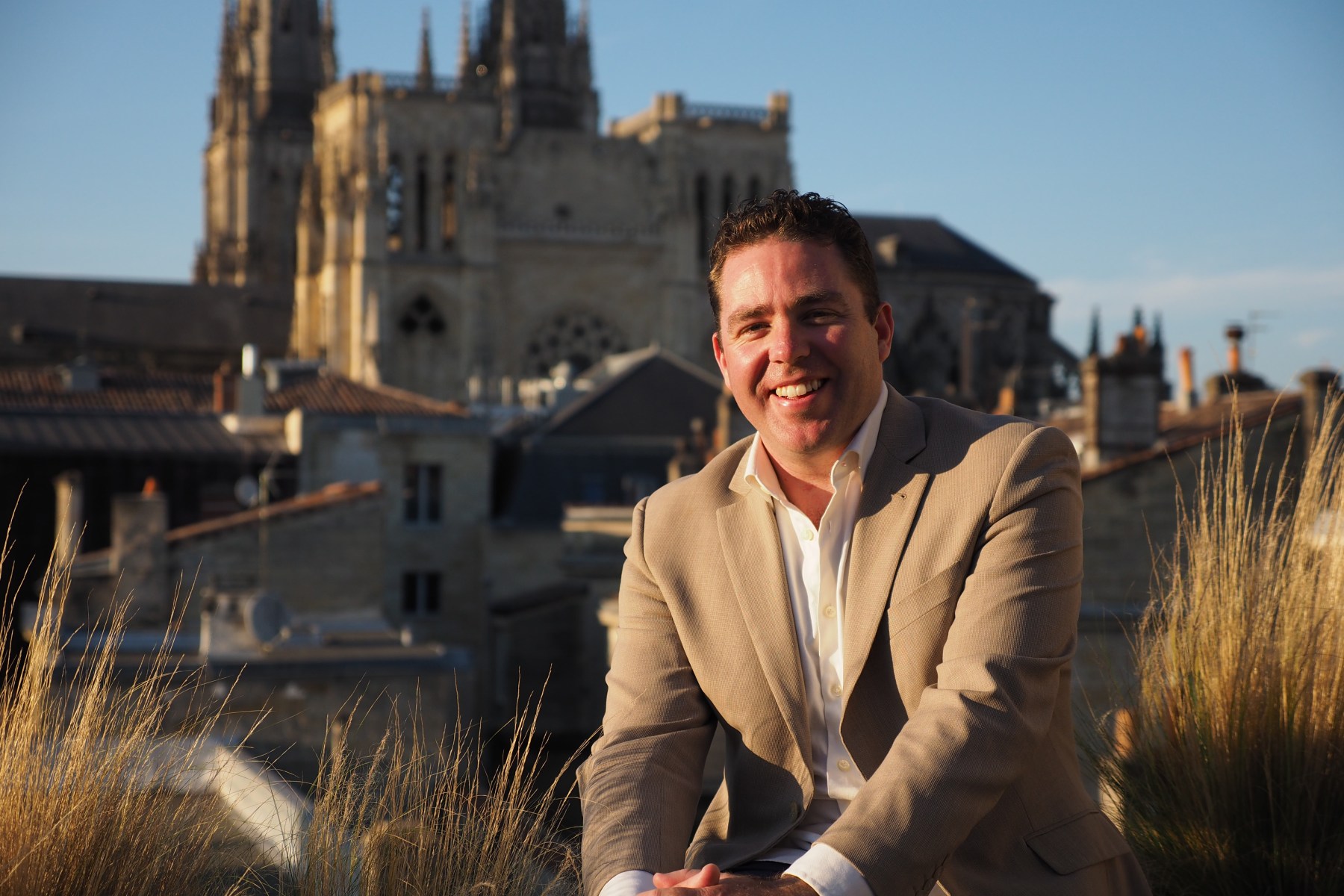
By Peter Griffin
Watching Obama’s second inauguration from the Mall in Washington D.C., sitting in on editorial meetings with the team at the Center for Public integrity, or visiting the fusion reactor at MIT in Boston.
It’s hard to pick a highlight from my brief time in the US as a Fulbright-Harkness Fellow during the frigid winter of 2013. There were so many unforgettable moments collected during a fellowship that saw me roam all over the US.
These travels gave me a firsthand look at the world’s most innovative journalism organisations, which inspired me to reimagine what was possible for public interest journalism at home, particularly in important science-related areas like climate change, and environmental reporting. As I reflect on that experience—and my 12 years since as a trustee of the Harkness Fellowships Trust—it’s clear how profoundly those moments shaped my work and perspective.
Transformative Lessons in the US
During my time in the US, I visited centres of excellence like Propublica in New York, the Center for Public Integrity in Washington D.C., and the Center for Health Reporting in California. Seeing how Propublica broke major national stories in partnership with outlets like The New York Times and NPR made me realise the power of collaboration over competition among news organisations. At the Center for Public Integrity, I was struck by their dedication to tracking public money and exposing political influence, especially as new challenges like superPACs emerged to change the political landscape. The Center for Health Reporting further showed me how focused, well-resourced journalism could have tangible impacts on communities.
All these organisations worked differently, but they shared a commitment to tackling stories that truly mattered—often winning Pulitzer Prizes for their efforts. The experience highlighted for me how much more resourced investigative journalism was in the US and how partnerships between independent outfits and mainstream media could amplify the reach and impact of deep reporting.
Bringing Ideas Home
Returning to New Zealand, I wanted to apply the best lessons from my US trip. In my paper, “Big News in a Small Country,” published in Pacific Journalism Review, I looked closely at whether a similar centre for independent public interest journalism could work here. I understood our market was much smaller, with fewer major philanthropists willing to underwrite journalism on the scale I saw in the US.
Instead, I argued for a more grassroots approach. Rather than expecting large, anonymous donations, we’d need to build trust and engage the public directly on the issues they cared about. The idea for PublicEyes came from this belief—a not-for-profit initiative designed to be community-driven and transparent, tackling investigations that mattered most to New Zealanders. From environmental concerns to government transparency, I saw the importance of selecting projects that captured public imagination and buy-in.
After a year’s work on PublicEyes, we abandoned that effort, but my fellowship experiences allowed me to assist Rebecca Priestley in developing the charter for the Aotearoa Science Journalism Fund, which for several years funded high-quality public interest journalism projects in New Zealand.
Stewarding the Future
My fellowship also shaped my role as Director of the Science Media Centre, informing my approach to governance and maintaining high editorial standards. I didn’t leave the Science Media Centr euntil 2018, but it was the experience meeting dozens of working journalists that spurred my eventual return to journalism which I now pursue in outlets such as BusinessDesk and New Zealand Listener.
As a trustee of the Harkness Fellowships Trust, I’ve worked to support new fellows, encouraging them to pursue cross-border learning and to bring fresh thinking back to New Zealand. It’s been rewarding to help others build on the insights I gained from the US, and to see our emerging public sector leaders have incredible experiences and return from the US with actionable insights.
Shaping New Zealand Journalism
Today, public interest journalism faces existential threats, both in the US and New Zealand. My experience in the US and my ongoing work with the Harkness Trust have convinced me that even small countries can nurture ambitious journalism despite the challenges facing the industry—if we mobilise public engagement, creative funding, and learn from the world’s best.
Reflecting back, I see my fellowship as a catalyst: it gave me the vision, tools, and connections to push for meaningful change and to recommit to the profession I trained in.


