HARKNESS
FELLOWSHIPS TRUST

2019 Fellowship – applications now open
Our changing society – your chance to play a role
We live in an age of accelerating complexity. The world is much less predictable than it used to be. We need leaders who understand the nature of the disruptive economic, technological, and environmental forces that are reshaping our world.
 We also need leaders with the ability to understand and interpret the changing social and cultural influences that are reshaping New Zealand society and the way we should live and work together in the future.
Public sector leaders who can help governments grapple with complex problems and develop responses across the spectrum of public policy and administration are more important than ever.
Visit the Fulbright New Zealand website for full details and to download the Harkness Fellowship application form.
That’s why the New Zealand Harkness Fellowships Trust is this year looking for applications from emerging New Zealand leaders who are keen to explore how public sector organisations can respond to and harness these changes within our society and the way we interact.
The Fellowship is available to mid-career professionals in any field of study or vocation (excluding health care policy and practise) to study or research in the United States for between eight and twelve weeks. One New Zealand Harkness Fellowship worth NZ$30,000 will be offered in 2019 (for travel in 2020), to a person who is currently employed in a public sector organisation* in New Zealand.
You could be looking at what the rise of social media means for free speech, how to build more inclusive communities or the human rights implications of poverty and climate change. The common theme to the work of our past Harkness Fellows is that they have returned from the US with ideas, knowledge and contacts to apply here to make sure we have a world-class public sector capable of responding to emerging challenges and opportunities.
* This includes the State Services, tertiary education institutions, State-Owned Enterprises and Crown companies, agencies that operate as part of the Legislative Branch of Government, and local government.
Closing date: 14 October 2019
The New Zealand Harkness Fellowships were established in 2009 by the New Zealand Harkness Fellowships Trust Board to reinforce links between New Zealand and the US and to enable emerging leaders in the public sector to benefit from study and travel in the US.
Their purpose is to enable appointed Fellows to gain first-hand knowledge and build contacts in their chosen field of endeavour that will be highly relevant to the NZ context and future NZ/US links. The Trust Board works in partnership with the Leadership Development Centre, a business unit within the State Services Commission that is the primary delivery vehicle for leadership development within government.
The programme has four goals:
– Support emerging leaders seeking to better understand public policy innovations in their chosen topic area so they can help build a better public sector.
– Reinforce New Zealand-United States links by enabling actual or potential leaders and opinion formers in New Zealand to benefit from new ideas, practices and new contacts in the US;
– Help improve the cross-fertilisation of ideas and experience between New Zealand and the United States; and
– Build a leadership network on both sides of the Pacific, encourage ongoing exchange between New Zealand and the United States and establish enduring relationships offering reciprocal benefits to both countries.
Eligibility
To be eligible, you must:
– be a New Zealand citizen who is currently residing in New Zealand;
– be an early to mid-career professional active in any part of the public sector;
– be a potential leader and opinion-former in your chosen field;
– have an interest in learning from your experience in the US and be capable of putting to effect in NZ, relevant lessons learned.
The Fellowship is not intended for post-graduate or academic research. It provides an opportunity for emerging leaders in New Zealand to develop their ideas, practices and contacts in the US.
Entitlement
A fellowship valued at up to NZ$30,000 is offered in 2019 (for an award start date in 2020). New Zealand Harkness Fellowships are intended to contribute towards travel costs (international and domestic), accommodation and per diem expenses. The funds are not intended for the purchase of equipment or any other research costs. Additional costs, in excess of NZ$30,000, must be met by the Fellow and/or their New Zealand employer.
A basic health benefit plan covering a maximum of US$50,000 per sickness or injury.
Award conditions
– The period of your award is a minimum of eight weeks and a maximum of twelve weeks with a 2020 award start date as negotiated with the NZ Harkness Fellowship Trust;
– You must travel on a NZ passport, and US immigration documentation must be completed from within New Zealand;
– You will be expected to take the opportunity to deliver seminars or speak with various groups as opportunities arise;
– You may be required to fulfil some Harkness media requirements before your departure for the US, during your exchange and/or on return to the NZ;
– You must provide Harkness (via Fulbright New Zealand) with copies of any articles or research papers resulting from your Fellowship. A final report must also be completed before you depart from the US.
Application process
When should I apply?
The deadline for applications is 14 October annually*.
Interviews will be held in Wellington on Thursday 8 November 2018. Fulbright New Zealand will pay the costs of travel to Wellington only for applicants residing in New Zealand. Applicants outside New Zealand who are unable to attend an interview in person may be disadvantaged.
We will advise you of the outcome of your application shortly after the interviews in November.
* Note that if the application deadline falls on a weekend or public holiday, the deadline is extended to 5:00pm on the next business day.
How do I apply?
You must complete and submit the application form below by the application deadline;
You must also submit all required support documents to us by the application deadline. These include:
– a CV of no more than four pages
– a scan of the photo page of your passport
– a letter of invitation from a potential host organisation in the US
– a short statement about any previous experience in the US
– a statement from your employer about your leadership experience and potential
– a letter from your employer confirming their support for your participation in the programme
– a one-page project statement
– references from three referees (the letter from your employer does not count)
What are the selection criteria?
Applicants will need to:
- Be able to demonstrate that they have the capacity to develop as exceptional leaders of intelligence, empathy and resilience who can play a significant leadership role in New Zealand.
- Have a proposed programme which meets the vision of the Fellowship: with clearly defined learning objectives and a plan to transfer and embed learning on return.
- Be capable of putting whatever lessons they have learned into effective use back in New Zealand;
- Have a commitment to increasing international understanding; and have the ability to be a cultural ambassador for New Zealand.
FAQs
Can I take my family?
Yes, although there is no additional funding available and the Fellow is solely responsible for any visa and insurance processes.
Where can I go?
Fellows are expected to be based at a university, research institute or ‘think tank’ for a significant part of their stay in the US. This requirement can also include a corporate (private sector) research institution, or a federal or state government department. Applicants are asked to provide a letter of invitation from a potential host organisation at the time of their application. It is also anticipated that during their time in the US, Fellows will travel outside of their ‘home base’ to other parts of the USA. Preference will given to applicants who have identified and can demonstrate they have made at least preliminary, positive contact with a host institution.
How long can I stay?
New Zealand Harkness Fellowships are for study or research in the US for a minimum of eight weeks and a maximum of twelve weeks.
Visit the Fulbright New Zealand website for full details and to download the Harkness Fellowship application form.
Contact Information
If you have any questions concerning eligibility or the application process, please contact:
Kyla Orr, Programme Manager
Telephone: +64 4 494 1501 Email: kyla@fulbright.org.nz
Urban insights from the Big Apple
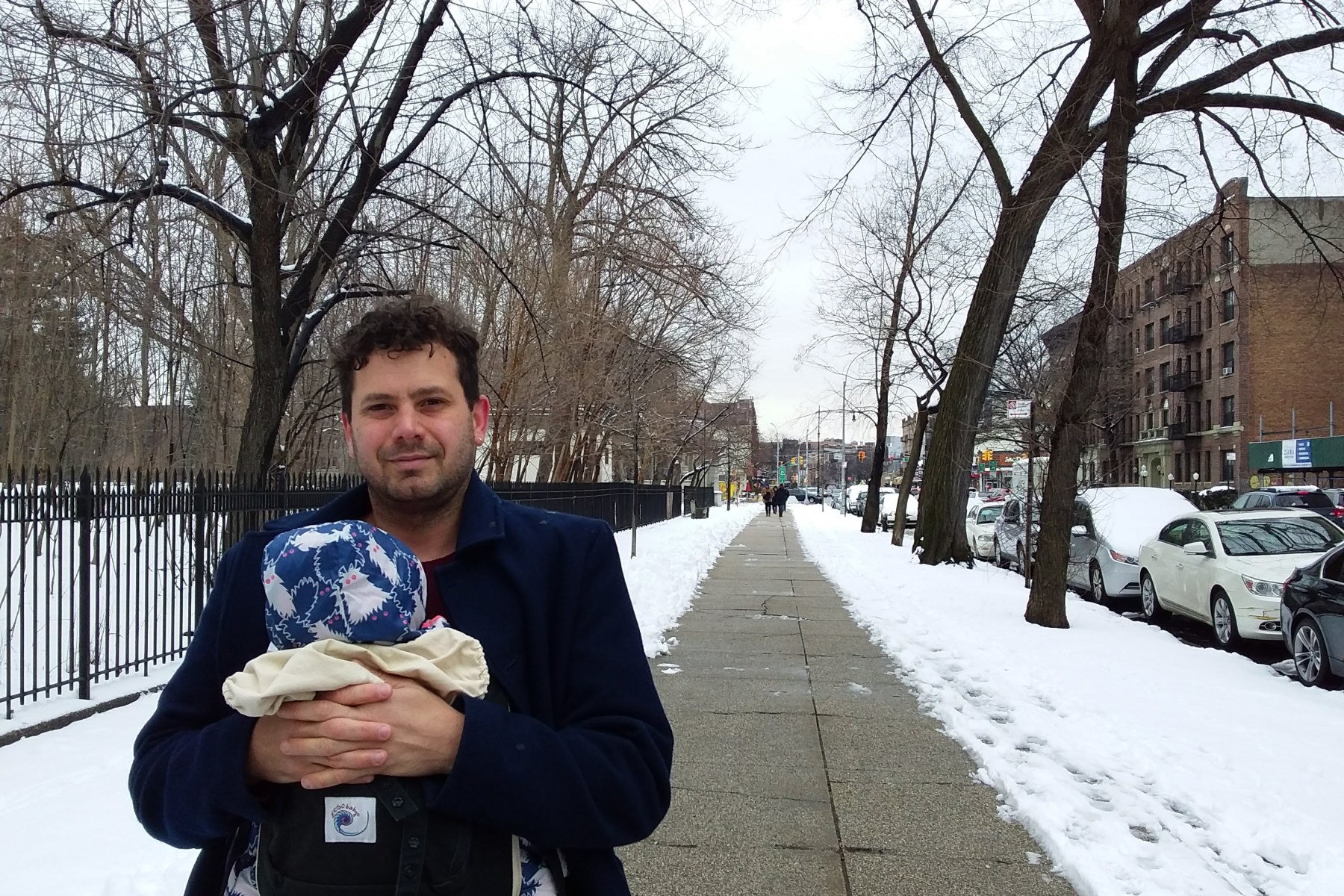
Ministry for the Environment policy analyst Joe Beaglehole is currently in New York on a Harkness Fellowship researching new tools for addressing the challenges of rapid urbanisation. We caught up with him as spring arrived in the Big Apple.
1. You are based in New York, a bustling metropolis and iconic for its urban design. What are your impressions on how the city approaches its town planning?
The revival of New York over the last twenty years is impressive and has led to stunning new development projects. But this growth hasn’t been inclusive, and residents feel alienated by change. The city is now in the midst of a housing crisis and has significant infrastructure funding challenges.
Unfortunately, because of the failure to supply enough new housing to keep up with growth, rising rents have led to anti-growth sentiment and opposition to new development, which is precisely what is needed to fix the problem. So New York planners face some significant challenges. Not to mention the potentially terrifying impact of climate change, sea level rise and major storms.
2. It must feel strange being away from your day to day work at the Ministry for the Environment? What have been the benefits of stepping back for a while to delve into your research topic?
It’s been instructive to compare both the policy and the public debate about housing and urban planning in the U.S and New Zealand. For example, the main driver of opposition to new housing in New York is concern about gentrification and displacement of residents in existing communities, while in New Zealand, the main concern has been changes in the amenity of neighbourhoods. New York housing policy also makes use of a much broader range of tools, including inclusionary zoning and various forms of rent control. It has been interesting to understand why this is the case.
3. What has it been like working with researchers at your host institution, the Marron Institute on Cities & The Urban Environment at New York University?
The Marron Institute is full of fascinating researchers and is well connected to the wider world of urban research across New York and the United States. The scale of research activity on urban issues is truly impressive. At NYU alone, there are half a dozen urban research institutes. I’ve also been impressed by the rigor of critique at seminars I’ve attended where working papers are tested as they are developed.
4. Are there any major themes emerging from your research so far that hint at what New Zealand could learn to improve our urban planning?
Urban land use decision making is particularly susceptible to capture by short term and local interests, at the expense of the longer-term public interest. I’m interested in ways that we can better reflect wider interests in institutions and decision making processes.
5. You arrived in the United States just as Spring arrived and Americans gear up for summer. What has the trip been like so far away from your research?
I’m here with my partner and our 7-month-old daughter. We’ve been enjoying all New York City has to offer, which is a lot! But our favourite thing is just to take the subway to one of New York’s amazing diverse neighbourhoods, explore and get something delicious to eat.
6. What’s the one thing you’ve promised yourself you’ll do before your time in the United States is up?
I’ve been wanting to make it to Hudson Yards. It is the largest private real estate development in the United States ever, and it has recently opened to mixed reviews. Some say it is yet another enclave for the rich in an increasingly unequal city. I’m interested in seeing it firsthand.
US-bound Harkness Fellows to tackle environmental & child welfare issues
Better outcomes for the environment and children will be the focus of research undertaken in top United States universities next year by the 2018 Harkness Fellows.
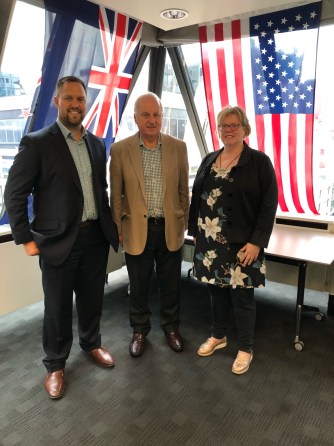
Harkness Fellowships Trust chairman Ross Tanner (centre) with 2018 Harkness Fellows Doug Jones and Donna Provoost
Doug Jones, Manahautū/General Manager of the Māori Policy and Operations team at the Environmental Protection Authority, and Donna Provoost, Director of the Strategy, Rights and Advice team at the office of the Children’s Commissioner, are this year’s recipients of Harkness Fellowships.
The $30,000 fellowships allow mid-career public sector professionals to undertake research projects in the US with the aim of gaining insights that could inform government policy in New Zealand.
“We look to assist emerging leaders in the public sector to help governments develop responses to some of the biggest disruptive changes facing society,” says Harkness Fellowship Trust chairman Ross Tanner.
“Our two new fellows embody that goal, working on aspects of public policy and administration that are crucial to New Zealand’s future.”
As the current General Manager Māori of the Environmental Protection Authority, and with roles and experience in managing Māori land, freshwater and commercial fisheries assets for Rongowhakaata Iwi Asset Holding Company, Te Ohu Kaimoana, Te Puni Kōkiri and Ministry for Primary Industries, Doug Jones will explore the environmental trade-offs, approaches and opportunity costs that need to be considered when introducing new technologies, such as gene editing, to protect native species.
“How do we have a mature conversation about environmental trade-offs in the face of public outrage and science denial fuelled by social media,” says Jones, who will be based at the Massachusetts Institute of Technology in Boston.
“It’s an exciting question that we need to explore for the benefit of protecting native species and for future generations.”
An economist with 20 years’ experience in the social sector working on issues including poverty and community development, Donna Provoost will undertake research at the University of Oregon’s Center for Translational Neuroscience and the Harvard Center for the Developing Child, exploring how neuroscience, psychology and related disciplines can better inform policies to improve the well-being and resilience of children.
“With the support of the Harkness Fellowship, I will bring new insights to the policy work on the Child and Youth Wellbeing Strategy” says Donna. “I am excited to have this opportunity to contribute to better lives for kiwi kids!”
“Through effective management of our endowment fund and additional fundraising efforts, we hope to be able to offer more than one fellowship in a given year again in future,” says Tanner.
The 2018 fellows join the likes of Hugh Fletcher, Hon. Shane Jones, Bridget Coates and Harkness Fellowships Trust patron Sir Richard Faull, as fellowship recipients adding to a legacy of leadership in and beyond government and evidence-based collaboration with US researchers, agencies and institutions.
About The Harkness Fellowships
The Harkness Fellowships programme has over the last sixty years enabled mid-career professionals who aspire to significant leadership roles within New Zealand, particularly in but not limited to the public sector, to benefit from new ideas, practices and contacts in the United States. The Fellowship application process is administered by Fulbright New Zealand.
The Fellowship programme in New Zealand has supported over 100 talented people to pursue study and research programmes in the US. Many have gone on to become leaders in their profession and to make outstanding contributions to science and technology, health care and education, economics and public sector leadership.

 HARKNESS