HARKNESS
FELLOWSHIPS TRUST
US-bound Harkness Fellow to explore AI policy development
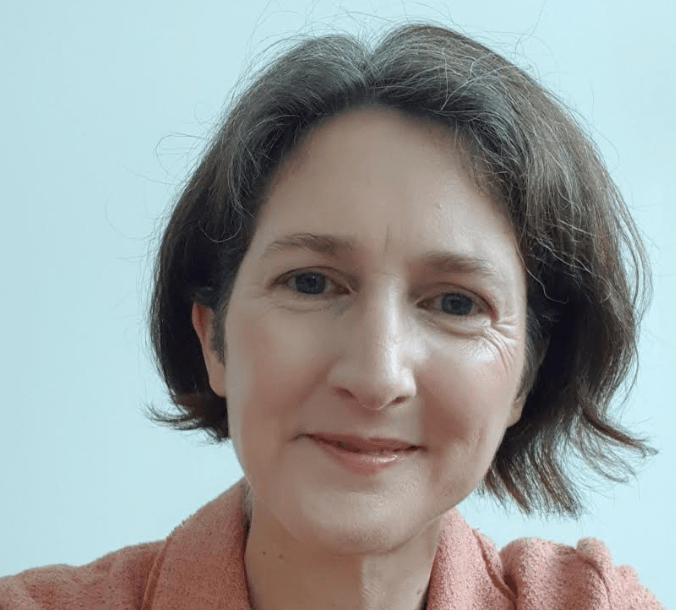
As Aotearoa develops its approach to adopting and using artificial intelligence, a senior government official will visit key centres of AI policy expertise in Washington D.C. as the 2024 New Zealand Harkness Fellow.
Sarah Box, Principal Policy Advisor – Digital Policy at the Ministry of Business, Innovation and Employment, beat out an impressive field of candidates to claim the prestigious New Zealand Harkness Fellowship for 2024.
As a senior member of MBIE’s Digital Policy team, Box has worked on significant areas of policy, including the development of the Digital Strategy for Aotearoa, and the Game Development Sector Rebate scheme.
Her current focus is working with policy and operational staff across 30+ government agencies to consider the opportunities and challenges posed by the rapid adoption of artificial intelligence, and to help formulate policy to guide its use in New Zealand.
With many of the rapid-paced developments in AI currently driven by US companies and institutions, the US Government has shifted into high gear in its efforts to ensure the technology is a force for good.
President Biden’s Executive Order on AI included policy initiatives such as the development of an internationally recognised AI Risk Management Framework and the establishment of the US AI Safety Institute to develop guidelines and undertake research to foster AI safety. The Office of Science and Technology Policy (OSTP) developed the US Blueprint for an AI Bill of Rights, runs the National AI Initiative Office, and is contributing to the Executive Order.
Learning from top US AI policy experts
Box will be hosted during her fellowship by the Washington D.C.-based Observer Research Foundation America, an independent non-profit that examines the implications of emerging technologies for areas of policy.
Her research will also see her spend time with experts in US government agencies, standards bodies, and research institutions to gain insights into approaches to AI-related policy development that could inform our own efforts to foster responsible use of AI.
“The US is a leader in AI policy and champions a pro-innovation, risk-based approach that aligns with our need to harness technologies like AI to underpin growth and economic resilience,” says Box, who also works closely with the Department of Internal Affairs on the country’s approach to “digitising government”.
The New Zealand Government has established an Algorithm Charter governing use of artificial intelligence systems by government agencies and last year issued guidance on the use of generative AI systems such as ChatGPT and Google Gemini.
MBIE is now leading the development of an AI Roadmap to support the adoption of AI across the economy as well as risk management-based guidance for business, with Box’s US visit well-timed to observe the latest developments.
Informing AI policy development in Aotearoa
“The aim in undertaking this fellowship is to gain knowledge that can directly feed the government’s policy work on AI, which seeks to support New Zealand’s economic performance, mitigate harms, and align with key international partners,” says Box.
Harkness Fellowships Trust Chair Aphra Green said the focus on emerging technologies this year, following previous fellows’ work on social and environmental issues in recent years, shows the breadth of important topics Fellows are supported to explore in the US.
“Sarah’s research project is perfectly timed to have input into an issue that is under active consideration both within New Zealand and internationally,” she says.
Sarah Box will depart for the US in September and share lessons from the project with the New Zealand policy community following her return.
Acting Te Kawa Mataaho Public Service Commissioner and Harkess Fellowships Trust Board member Heather Baggott, says the growing awareness of the Harkness fellowships across government has caught the attention of executive leaders working on issues integral to the country’s future.
“The Leadership Development Centre based within the Public Service Commission promotes the Harkness Fellowships as one of the best opportunities for executive leaders in the Public Sector to pursue US-based research in policy-related areas of relevance to their work.
“We are delighted to see Sarah selected as the 2024 Fellow and are looking forward to both supporting her through the fellowship and learning about the insights she gleans from the experience.”
About the Harkness Fellowships Trust
The New Zealand Harkness Fellowships were established in 2009 by the New Zealand Harkness Fellowships Trust Board to reinforce links between New Zealand and the US and to enable executive leaders in the Public Sector to benefit from study and travel in the US. The Fellowships are valued at up to $70,000, and offer an emerging leader in the public sector the opportunity to spend 3-6 months undertaking research in the United States.
The fellowships enable successful candidates to gain first-hand knowledge and build contacts in their chosen field of endeavour that will be highly relevant to the NZ context and future NZ/US links. The Trust Board works to administer the fellowships in partnership with the Leadership Development Centre, which is acting on behalf of the NZ Government.
The current fellowships continue a Harkness fellowship programme that stretches back over sixty years. Past fellows include scientist Professor Sir Richard Faull, former Director General of Health Dr Karen Poutasi, businessman Hugh Fletcher and Public Service Commissioner Peter Hughes.
Aimee Hadrup on “powering up communities” to give kids the best start
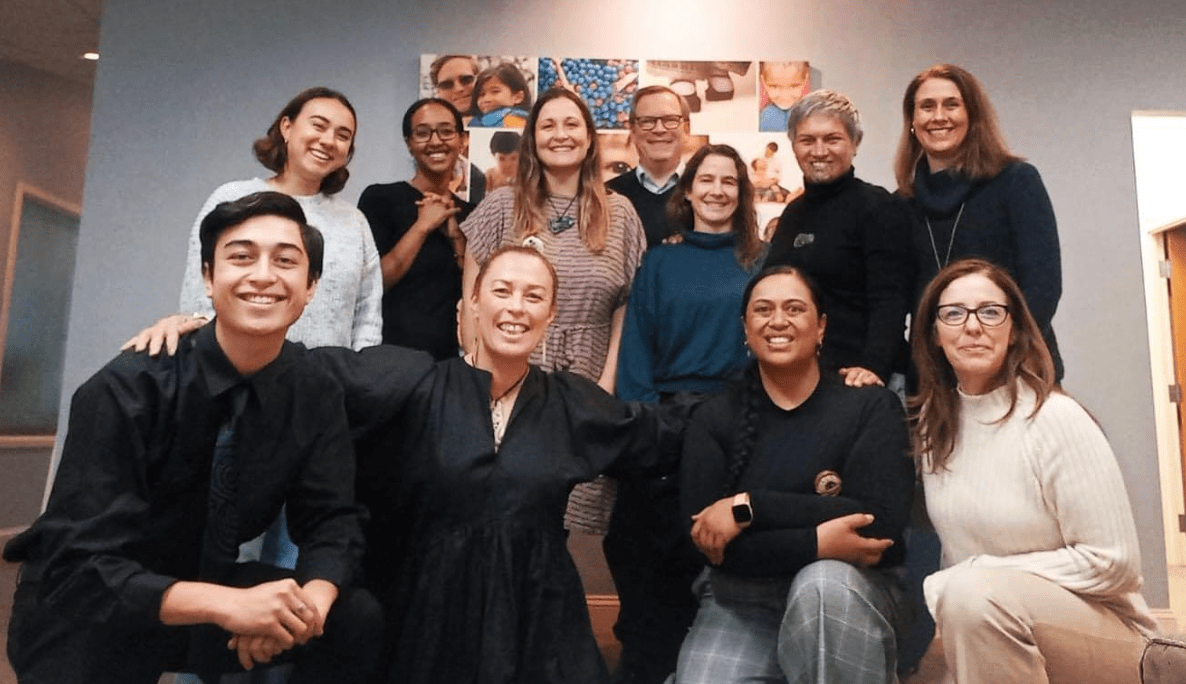
How do we support whānau in the critical first 2,000 days of a child’s life to give them the best chance of having a healthy and productive life?
Our 2023 Harkness Fellow Aimee Hadrup set out to find answers to that question, exploring how innovative place-based initiatives underway in the US to help inform thinking around how our public service can better support communities to lead their own wellbeing responses.
In this Q&A, Aimee reflects on her fellowship experience, which included time spent at the renowned Harvard University Center on the Developing Child.
Where and when did you complete your Harkness fellowship?
I travelled to the U.S. in October 2023 and came back early February 2024. I squeezed a lot in – spending time in Washington D.C., Boston, Connecticut, North Carolina, New York City, Los Angeles, and the Bay Area.
What did you set out to learn more about?
There is increasing awareness in Aotearoa that the first 2000 days of a child’s life are a critical time to lay the foundations for a positive life trajectory, but we still have a long way to go to realise the potential of this transformational time by working together across organisational and agency silos to better support tamariki and whānau wellbeing. Working at The Southern Initiative has helped me understand the power of place-based approaches to tackling complex challenges, so I focussed my Fellowship on learning from other equity-focussed place-based initiatives working to improve early childhood outcomes.
I was able to connect with a wide range of people from across the early years ecosystem in the States, including community leaders, government officials, philanthropic organisations, national networks and social innovators. I was also lucky to spend time with academics at Harvard University, Stanford University and UCLA to understand how they are supporting public sector leaders and communities to act on the science of early childhood development.
What were the key insights you gained from your time completing the fellowship in the US?
This Fellowship experience further reinforced to me that communities have the answers to many of the challenges we are facing. Finding ways to shift power and decision-making to local parents, families and communities is central to being able to reconfigure our early years system in ways that produce better and more equitable outcomes. I loved seeing examples where data and measurement was being used in ways that enabled community-led transformation.
A concept in wide use in the States is ‘early childhood systems building’ – an approach that makes explicit the important work required to enable a coherent early years system in the places where people live their lives. I like this way of thinking as it reinforces the importance of a ‘bottom-up’, whole-of-systems approach that builds on and weaves together what is already working for families in communities, while also creating a tangible mechanism for overcoming the fragmentation created by agency silos. I really believe that the key to creating more effective and efficient public services lies in bringing decision-making closer to people and place.

Aimee and an amazing parent leader from Brownsville, Brooklyn, NYC.
Did anything particularly surprise you about how the Americans approach your subject of interest?
I was amazed at the maturity of the field of place-based approaches and the widespread understanding amongst government, philanthropy and the academic community that the infrastructure for community-led and place-based collaboration is a crucial foundation for getting things right in the early years.
The volume of philanthropic investment into early years-focussed and place-based work was mind blowing. It was great to see the philanthropic sector taking a place-based approach to investment and partnering meaningfully with government to enable communities to lead. Things are made possible that couldn’t happen through the efforts of government alone. It’s given me a lot of food for thought.
The generosity of sharing and the calibre of people I was able to connect with was pretty overwhelming. I will forever be grateful to the amazing Joan Lombardi for graciously opening the door to so much of the early years ecosystem for me, and to James Cairns at Harvard University for supporting my Harkness Fellowship application and taking on the administrative burden associated with getting my visa sorted.
I have to say it was also a difficult time to be in the States. The horrific images coming out of Gaza throughout my time there will haunt me for the rest of my life. I was heartened to see the movement of American Jews standing up against the killing of so many innocent children.
Did you learn anything from your US research that you think could readily inform policy development here in Aotearoa?
There is already compelling evidence for the return on investment in the early years but we’re still grappling with how to move our effort and resources earlier in the life course. I’m interested in what a social investment approach to the early years could look like that goes beyond a focus on discrete interventions and targeting tightly defined cohorts of people, towards a more place-based approach that uses data and evidence to advance local priorities and reorientate investment around what matters and makes the biggest difference to children and their whānau.
The insights from my Fellowship have helped me get really clear on the kinds of collaboration infrastructure that can help create a coherent early years system that is responsive to the lived realities of the whānau and communities we serve. I was able to identify critical features common across the initiatives I engaged with. These are important policy considerations that provide a good basis for getting serious about how we ‘power up communities’ here in Aotearoa. In our context, this infrastructure obviously needs to be grounded in the foundation of honouring te Tiriti, and further developing our ways of working in partnership with whānau, hapū and iwi.
What were the highlights of your trip beyond your research activities?
I was lucky to be able to bring my wee whānau with me which was amazing. My partner quit his job to be primary caregiver to our three-year-old and seven-year-old through the time. It certainly had its moments (travelling with a three year old is not for the faint hearted!) but all the adventures we had will be lifelong memories. New York City at Christmas time was particularly magical!
The opportunity to pause my day to day work responsibilities and have more time to reflect and process was pretty transformational for me. In this purpose driven work we can run ourselves pretty ragged. I am guilty of over committing myself and trying to spin too many plates at once. The Fellowship has helped me to realise that true leadership requires creating spaciousness and recognising that you can’t actually give more than 100% all the time. When you’re in a pattern of over-working, slowing down the pace can induce feelings of guilt but I’ve come to strongly believe the ability to slow down and restore your batteries is the mark of a truly strategic leader.

Aimee and her family check out Yosemite National Park at the end of their trip (photo courtesy of Aimee’s 7-year-old!)
What are the next steps for you in terms of making use of the fellowship experience to inform policy or practice in our public sector?
What I’ve learned has been incredibly useful in terms of what we are currently grappling with around how to power up communities via social investment and place-based approaches. I’m starting to workshop the findings of my Fellowship with our partners and collaborators, particularly the agencies involved in our Early Years Implementation Learning Platform and the South Auckland Social Wellbeing Board. I have some more formalised sharing opportunities coming up including a webinar with the Institute of Public Administration New Zealand (IPANZ) in the next little while.
The Fellowship definitely helped to forge ongoing ties with the USA and I’m excited about ongoing learning exchange including with folks at Harvard, Stanford and UCLA. We have a session coming up soon with the team at Stanford to share some of what we’ve been learning about the connections between mātauranga Māori and western neurodevelopmental science. We did something similar with the team at the Center on the Developing Child while I was at Harvard – having some of my colleagues and collaborators join me in Boston for that was such a highlight!
Last week I had the privilege of bringing together some officials from different agencies in Wellington to connect with Colin Groth, a key leader from Strive Together – a national network that supports place-based ‘cradle to career’ work in the States who was over here on sabbatical. It was great to be able to share a bit of the love from my Fellowship and for people here to get the chance to learn from the Strive Together journey. Their work is hugely inspirational and a living example of the kind of field building ‘national backbone’ infrastructure needed to really leverage the power of community-led approaches.
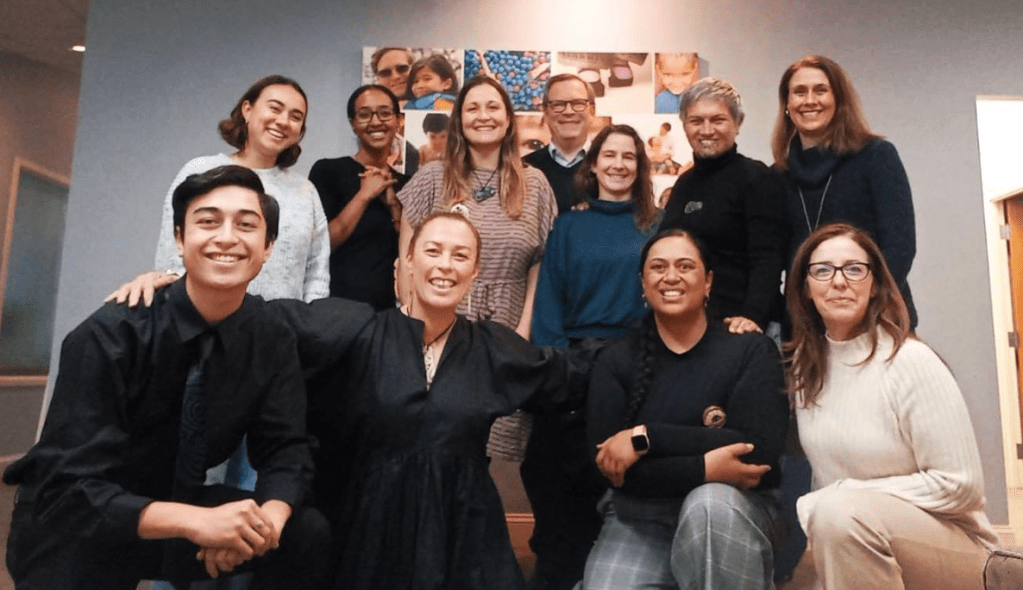
The Aotearoa learning exchange delegation with some of the Center on the Developing Child crew in Boston.
Based on your experience, who is the Harkness Fellowship most suitable for?
A fellowship like this is a rare opportunity to get a window into what your area of interest looks like in another country. It was really validating to see some of the things we are learning make a difference here in Aotearoa also reflected in a wildly different context. On the other hand, it was also refreshing to have some of my own assumptions challenged and my thinking stretched, which was just what I was looking for.
If you’ve been immersed in a particular field that you are passionate about and the time is right for an injection of fresh thinking and the opportunity to consolidate your learning you should go for it!
Harkness Fellow Jym Clark on climate adaptation and Indigenous planning in New Mexico
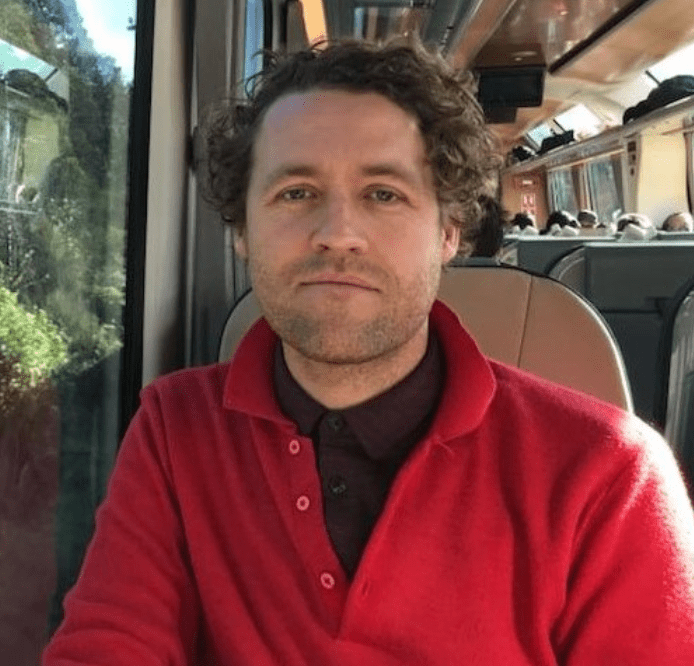
In late 2023, Harkness Fellow Jym Clark, a senior policy analyst at the Ministry for the Environment, spent several months in New Mexico learning about how initiatives underway in the state combine climate change adaptation policy and urban planning that takes account of indigenous and other ethnic communities’ approaches and needs.
in this Q&A, we catch up with Jym about his fellowship experience, lessons we can learn from, and the privilege of spending time on Tribal lands in New Mexico.
Where and when did you complete your Harkness fellowship?
I began my fellowship in Los Angeles in August 2023. Most of my time was spent in Albuquerque New Mexico in the beautiful arid south-west of the United States. I was warmly hosted by the Indigenous Design and Planning Institute at the University of New Mexico.
I ended my fellowship at Christmas 2023 via Hawai’i where like in New Mexico I also met communities, government staff and academics working to adapt to climate change.
What did you set out to learn more about?
How we can adapt our cities and other urban areas to respond to our changing climate. More heat, more wild fires, more flooding will become more commonplace, and for those on the coast sea level rise too. I also wanted to investigate how we can do this in an equitable way and integrate Indigenous ways of knowing and acting into how we respond. As a planner I also wanted to observe how American planners are working to adapt to climate change and how they act and think.
What were the key insights you gained from your time completing the fellowship in the US?
The sheer scale of the response that is needed to adapt to the changing climate was a key insight. Starting adaptation needs to happen now if we are going to have hope of staying ahead of the issue. Supporting community level action needs to happen to manage the breadth of work.
Climate adaptation is not completely new, it is a reprioritisation of efforts to respond to natural hazards most of the time.
Tribal adaptation plans are focused not just on environmental concerns, they are also responding to their challenges some which have been prevalent for many years.
I was impressed with the scale of effort that is beginning to swing into action. There is significant funding ready to build back better critical infrastructure, and to support community and tribal level efforts.
Did anything particularly surprise you about how the Americans approach your subject of interest?
The American positive spirit reminded me that we need to focus on the other benefits of climate adaptation work. Its easy to view climate adaptation as only a massive cost of digging us out of the hole we collectively dug ourselves into by wrecking the climate. Planting trees in cities to reduce the temperature for very hot days to avoid heat stress (a problem Aotearoa is predicted to face too) will take a lot of effort and money just to get us close to a place where we are at now. But it will bring other benefits too such as improved biodiversity and better urban amenity for 365 days of the year.
The US also has significant policy infrastructure to report on climate mitigation and adaptation. The Fifth Climate Assessment was released when I was in the USA and has a big impact on policy work.
Did you learn anything from your US research that you think could readily inform policy development here in Aotearoa?
Plenty! Involve people and communities in decision-making and recommendation-making bodies not just technical experts – climate adaptation efforts are more likely to success when they are done with communities rather than done to them.
Nature-based solutions are key – fighting the changing environment with hard engineering solutions will be extremely costly, may not work, and requires significant embodied carbon, whereas natural or living approaches is going to be more effective most of the time.
Make space for the knowledge of Indigenous communities – to help understand the past and present state of the environment to understand what might come in future.
Start acting now – because the window on some adaptation approaches is closing soon, such as nature-based solutions.
What were the highlights of your trip beyond your research activities?
Getting to spend time on Tribal lands in New Mexico which has many Indigenous settlements called pueblos. Pueblos are clusters of homes and other activities which have been continuously occupied for hundreds of years. The pueblos sustain culturally responsive ways of living which maintains practices such as harvest dances which attracts hundreds dressed in traditional regalia to perform together.
I enjoyed visiting with my family the beautiful landscapes and urban settlements of New Mexico. The mountains, hot springs, deserts, and snow were breathtaking. The people were interesting and interested in us, including our neighbours in Old Town Albuquerque and the people who invited us into their lives and beautiful homes for dinner will be experiences I won’t forget.
What are the next steps for you in terms of making use of the fellowship experience to inform policy or practice in our public sector?
I am speaking at Te Kōkiringa Taumata New Zealand Planning Institute conference in Kirikiriroa this month and have other arrangements to speak inside government agencies and outside government like the Te Wananga o Aotearoa. Research organisations are interested in the findings too.
I’m still at the Ministry for the Environment which has a very active role in getting policy settings right for climate adaptation and managing the risks of natural hazards.
I’m also working to bring the second global Indigenous planning symposium to Aotearoa NZ in 2025 or 2026. This will bring many Indigenous Planners from the USA and from other parts of the world to Aotearoa which will help advance our Indigenous planning policy and practice to focus on pressing issues such as climate adaptation.
Based on your experience, who is the Harkness Fellowship most suitable for?
It’s for those who are excited for the future of our country and ready to share the challenges and opportunities we face with people in the USA whose nation is big and very complex. And its for someone who can take on future roles where they can help shape decision-making.

 HARKNESS